Summary
On June 5, XB Software turned 18. From Flash websites and legacy systems to AI-assisted development and project rescues, this article explores how the software industry changed, what truly tested the company’s resilience, and why successful software projects were never really just about code.
Eighteen years in software development services is a strange amount of time.
Long enough to remember when websites proudly used Flash intros nobody asked for. Long enough to survive multiple “this technology will replace developers forever” moments. And most definitely long enough to see entire frameworks rise, dominate conference talks, and quietly disappear into Stack Overflow archaeology.
And somehow, after all of that, XB Software is turning 18.
Over the years, we’ve built project management systems, rescued collapsing projects in different industries, modernized platforms that looked like they were held together by hope and deprecated APIs, and adapted to nearly every major shift in software development — from desktop-heavy systems and jQuery chaos to cloud platforms, AI-assisted development, and modern software architectures.
And honestly, after 18 years, one thing became very clear: software development was never really just about code.
From Flash to AI: Watching the Industry Reinvent Itself Every Few Years
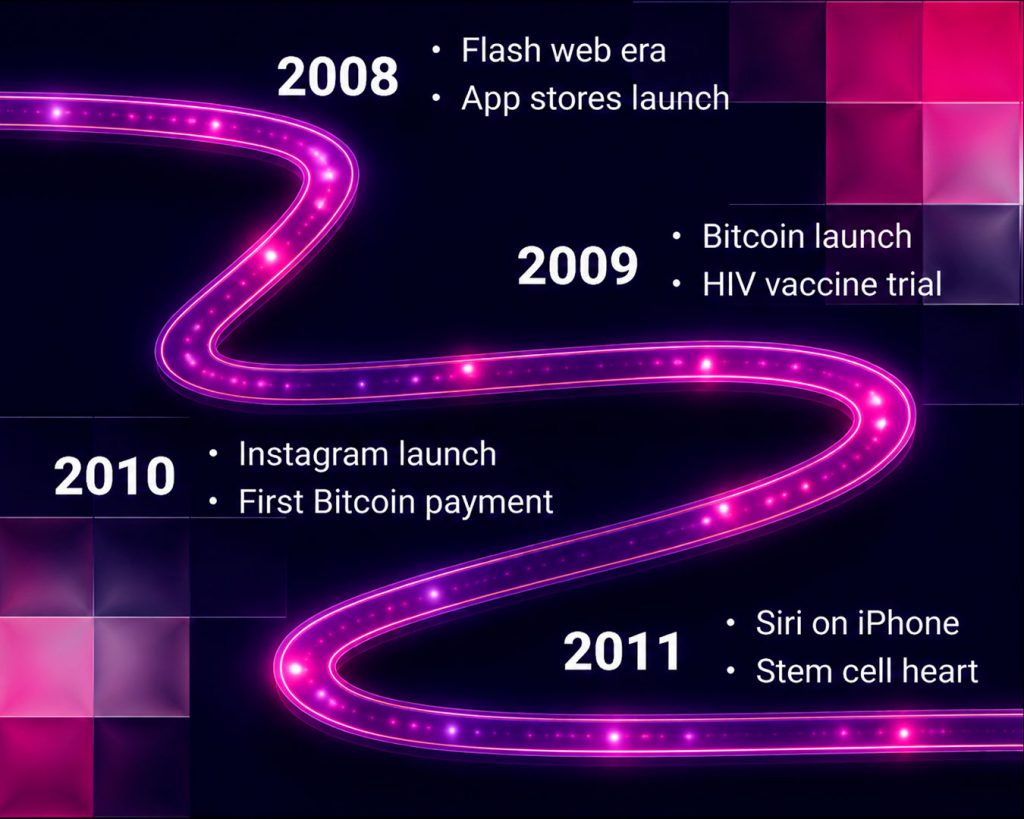
World technological changes from 2008 to 2011 一 from Flash to Siri
If you’ve been in tech long enough, you stop treating “the future of software development” as a dramatic event and start treating it like weather.
We’ve seen:
- Flash websites with cinematic loading screens,
- the rise and fall of Microsoft Silverlight,
- “mobile-first changes everything,”
- “JavaScript frameworks will stabilize soon” (they did not),
- cloud transformation waves,
- microservice overengineering,
- blockchain being added to things that absolutely did not need blockchain,
- and now AI generating applications from prompts.
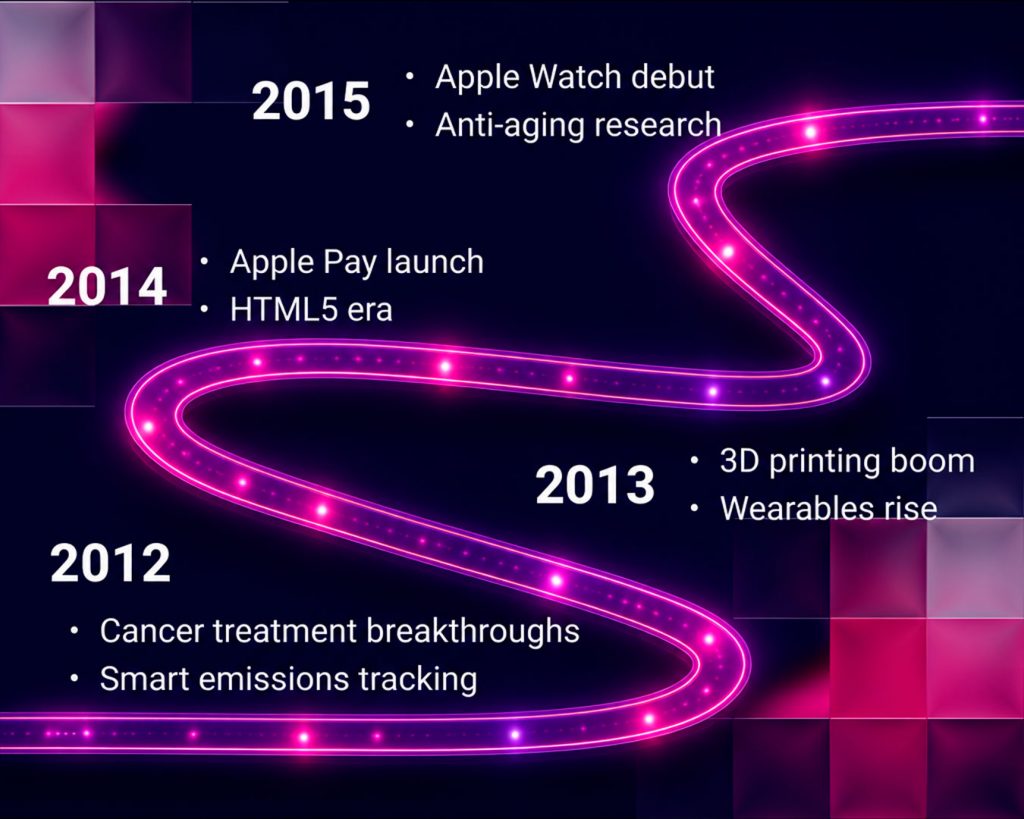
World technological changes from 2012 to 2015 一 from cancer treatment to anti-aging research
Every era promised the same thing: “This changes software development forever.”
And to be fair, many of them actually did.
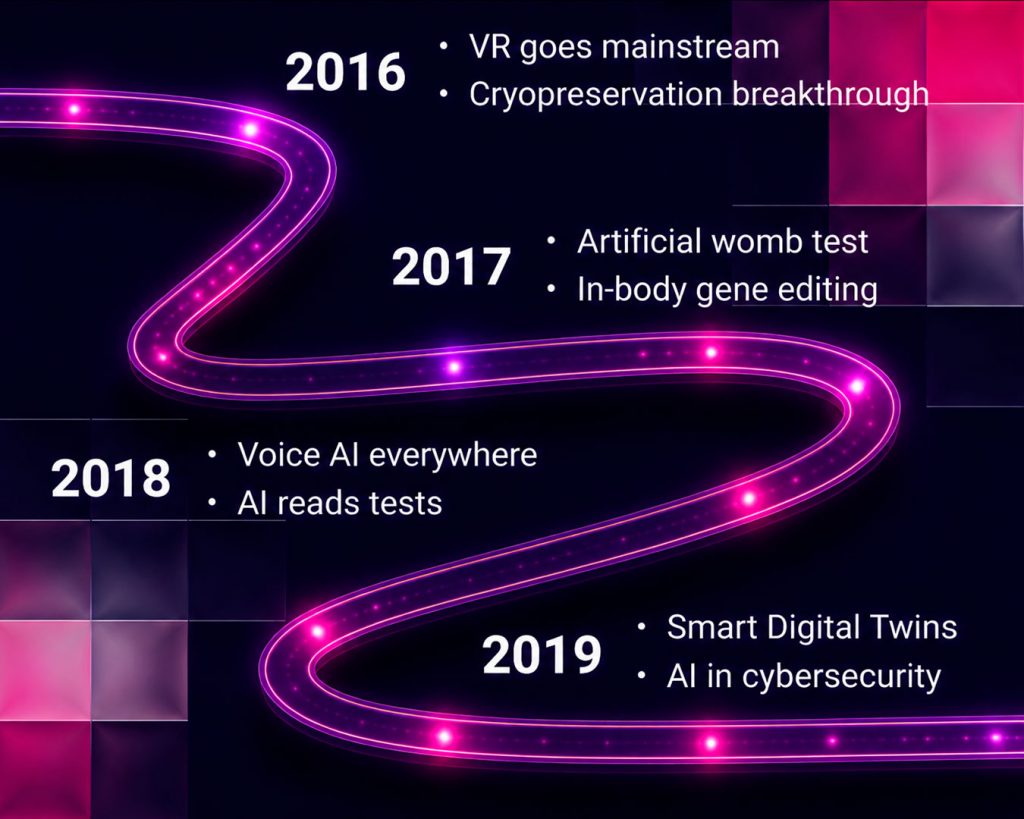
World technological changes from 2016 to 2019 一 from VR to AI in cybersecurity
The IT industry today looks nothing like it did 18 years ago. Development cycles became faster. Expectations became higher. Users became less patient. Businesses became more dependent on software than ever before.
But something else stayed surprisingly constant. Clients still need systems that actually solve business problems, scale under real usage, remain maintainable after launch, and do not collapse the moment the MVP becomes successful.
Technology changed dramatically. Business reality didn’t.
Read Also AI Is Changing Disciplined Agile Delivery. Here’s How We’re Adapting
Some Technologies Disappeared, But Legacy Systems Never Did
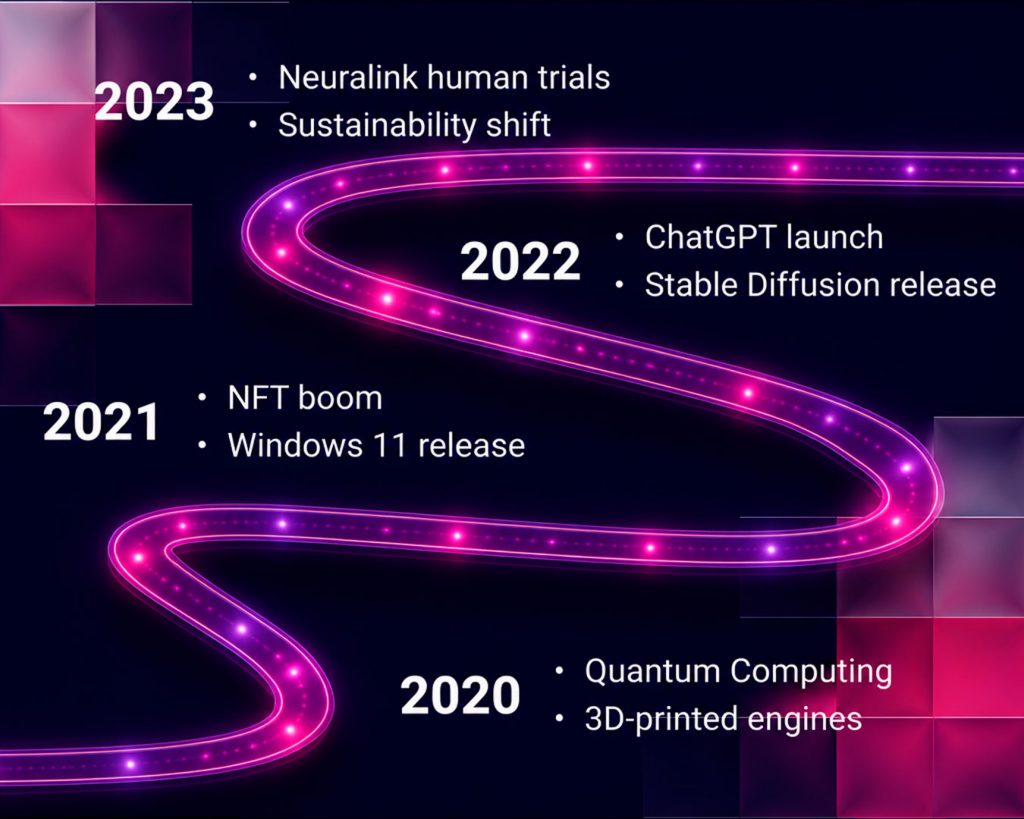
World technological changes from 2020 to 2023 一 from Quantum Computing to Neuralink
One of the funniest things about software development is that old technologies never truly die. They simply become “business-critical infrastructure.”
At XB Software, we’ve modernized systems that felt like digital time capsules:
- platforms running on frameworks nobody touched in years,
- obsolete workflows depending on undocumented logic,
- CRM systems where changing one button somehow broke invoices in another module,
- and databases containing “temporary solutions” older than some junior developers.
And yet those systems often powered real businesses generating real revenue.
That taught us an important lesson very early:
Perfect technology matters less than business continuity.
Sometimes clients do not need a revolutionary rebuild. Sometimes they need stability, modernization without operational disruption, gradual architecture improvements, or a partner capable of understanding both technical and business risk.
Because in real-world software development, “rewrite everything from scratch” is rarely the magical solution developers imagine.
Read Also Top 11 Application Modernization Companies in the USA — Market Analysis
The Projects That Almost Broke Everyone (And Why They Mattered)
Every long-running software company has “those projects.” The ones where requirements changed weekly, integrations behaved unpredictably, deadlines became philosophical concepts, or inherited codebases started revealing increasingly creative engineering decisions.
We had projects that forced us to rethink processes completely. Projects that taught us how critical communication really is. Projects where the hardest problem had nothing to do with programming itself.
And honestly, many of the biggest lessons came from project rescues.
Over the years, companies approached XB Software after:
- previous vendors disappeared, so they needed to switch vendors,
- products became impossible to maintain,
- MVPs failed under production load,
- architectures stopped scaling,
- or rapid development created technical debt faster than teams could manage it.
Those situations taught us something the industry often ignores: software problems are rarely isolated technical problems. Usually, they begin much earlier with unclear business goals, unrealistic expectations, missing communication, rushed architecture decisions, or treating development speed as the only success metric.
Code simply becomes the place where all those decisions eventually surface.
Read Also 8-Step Plan for Reducing Your Technical Debt Without Disrupting the Workflow
“Can You Build This by Next Friday?”
After 18 years, we can confidently say that deadlines in software development are less about physics and more about collective optimism.
Somewhere along the way, the industry normalized impossible expectations:
- enterprise platforms “in several weeks,”
- AI products without clear business models,
- “simple features” connected to 14 subsystems,
- and startup MVPs expected to scale like mature SaaS products from day one.
The funny part is that clients are not usually trying to create chaos. Most businesses simply operate under pressure themselves along those investor expectations, market competition, internal deadlines, budget limitations, or operational bottlenecks.
That is why successful software partnerships are about helping businesses to make better technical and strategic decisions before problems become expensive.
Sometimes the most valuable thing a development team can say is:
- “This feature will hurt scalability later,”
- “Your process is the real bottleneck,”
- or “Launching faster may actually increase long-term cost.”
After enough years in software development, you stop measuring success only by delivery speed. You start measuring it by how stable, maintainable, and useful the product remains years later.
Read Also AI MVP vs Traditional MVP: Key Differences, Benefits & Use Cases
Then AI Arrived and Everyone Started Rebuilding Reality Again
And now we have AI.
If the last 18 years taught us anything, it is that the industry loves two things:
- overhyping new technology,
- and underestimating what happens after deployment.
AI has absolutely changed software development already by turning traditional development into AI-assisted software development. It accelerates coding, prototyping, testing, and automation faster than most previous shifts combined.
But it also exposed an interesting divide:
There is a huge difference between generating software and engineering sustainable products.
We increasingly see businesses discovering that:
- fast prototypes are not the same as scalable systems,
- AI-generated code still requires architecture and validation,
- and “it works” is not the same as “it will survive production.”
That is why XB Software treats AI the same way we approached every major technology wave before: not as magic, not as a threat, but as another powerful tool that still requires engineering discipline.
Because trends change. Business responsibility does not.
What 18 Years Actually Taught Us About Software Development
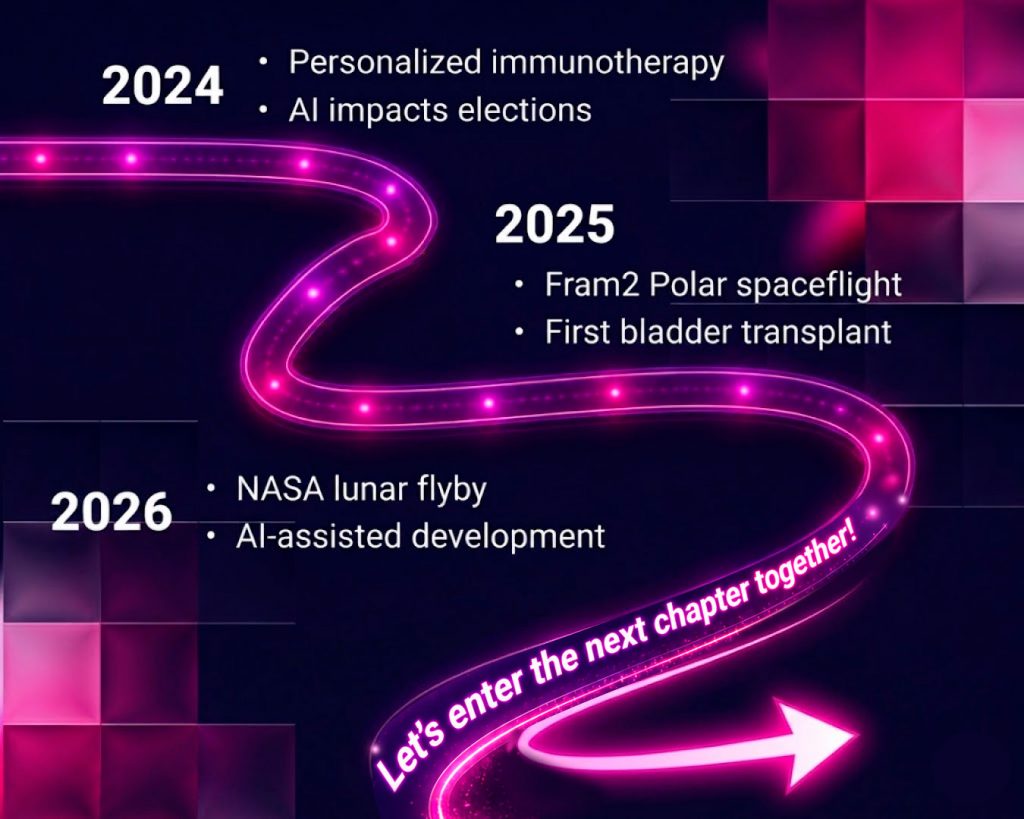
World technological changes from 2024 to 2026 一 from AI impact on elections to the new chapter
Probably the biggest surprise after nearly two decades in tech is realizing how little success depends on “perfect code” alone.
The strongest projects usually succeed because:
- communication is transparent,
- business goals are clear,
- scalability is planned early,
- risks are discussed honestly,
- and both sides understand what they are actually building.
Meanwhile, many failed projects technically “worked.” They simply solved the wrong problem, scaled poorly, or became impossible to evolve. That is why, over time, XB Software gradually evolved from “people who write software” into something much broader:
A long-term technology partner helping businesses to navigate complexity, growth, modernization, and change.
Sometimes that means building new systems. Other times ー stabilizing existing ones. And sometimes it means helping clients to avoid expensive mistakes before development even starts.
And after 18 years, that part of the job matters far more than chasing trends.
Read Also The Value of Clear Requirements: How to Choose the Right Vendor for Your Software Project
18 Years Later, We’re Still Adapting
The industry will keep changing. New frameworks will appear. New buzzwords will dominate LinkedIn. Someone will probably announce “the end of software engineers” again next quarter.
And honestly, that is fine.
Because longevity in software development was never about predicting every trend correctly. It is rather about adapting without losing the ability to build reliable systems that businesses can actually depend on.
That is what XB Software has been doing for 18 years: helping companies to modernize, scale, recover, rebuild, launch, optimize, and survive their own technological growing pains. So, if you need a reliable custom software development vendor that will hear you out, contact us.