How We Work
At XB Software, every project follows a well-defined delivery framework that combines product discovery, AI-assisted engineering, Agile execution, quality assurance, DevOps, and continuous collaboration to reduce delivery risk and keep software aligned with business goals.
What You Can Expect Working With XB Software
Every software project is unique, but our delivery approach follows the same principles regardless of project size, industry, or engagement model. From the first discovery meeting to long-term product support, we focus on reducing uncertainty, maintaining transparency, and helping clients make informed technical and business decisions.

Structured Planning
Every project begins with a defined roadmap, delivery priorities, realistic estimates, and agreed milestones, so expectations remain aligned throughout development.

Transparent Delivery
You’ll always know what the team is working on, what has been completed, what comes next, and which risks or decisions require attention.

Regular Communication
A dedicated Project Manager coordinates communication, organizes regular sync meetings, provides progress updates, and keeps stakeholders informed throughout the project.

Architecture-First Engineering
Major technical decisions are validated before implementation to reduce technical debt, simplify future maintenance, and support long-term scalability.

Responsible AI-Assisted Development
We use AI where it speeds up repetitive engineering tasks, documentation, or code generation, while experienced engineers remain responsible for architecture, business logic, quality, and security.

Continuous Quality Assurance
Testing, code reviews, and validation are integrated into the development process rather than postponed until the end of the project.
AI-Driven Development Methodologies We’ve Mastered
We don’t treat AI as a shortcut for software delivery. Instead, we’ve developed engineering practices that combine AI-assisted development with structured planning, architectural oversight, and human decision-making. This allows us to accelerate repetitive work while maintaining software quality, maintainability, and long-term scalability.
Rather than allowing AI to generate software without context, AI supports engineers with repetitive tasks, while developers retain responsibility for system design, business logic, integration decisions, and quality control.
- AI-assisted development with governance and code quality
- Large software modernization initiatives
- Multi-team product development
- Long-term, evolving software products
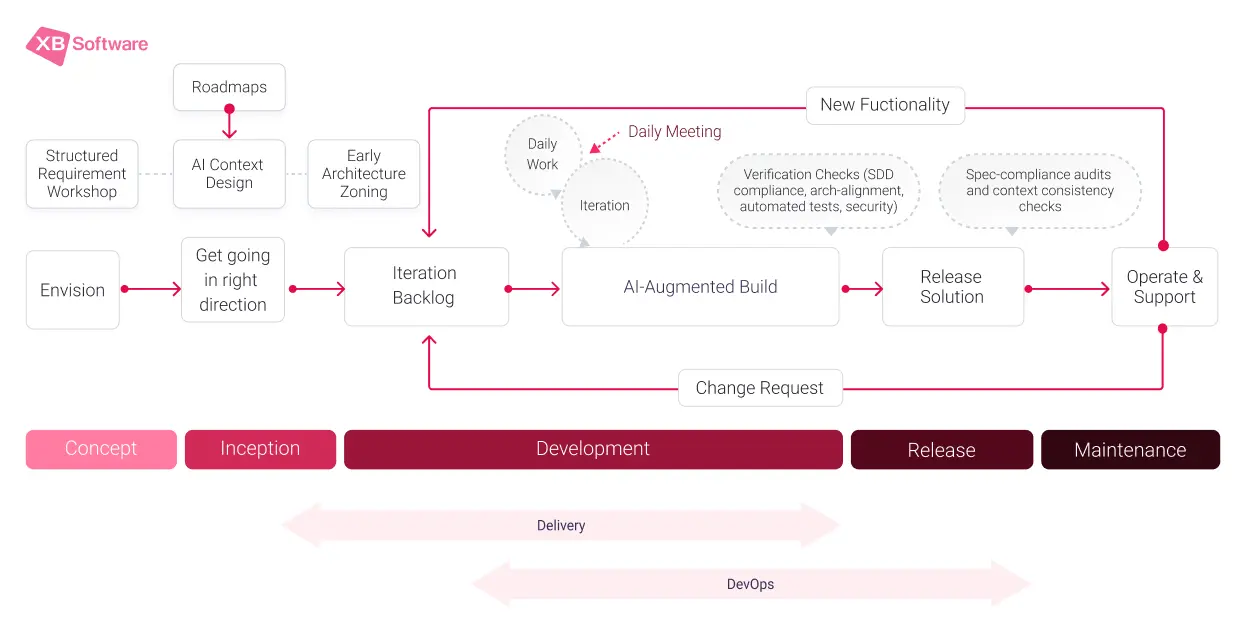
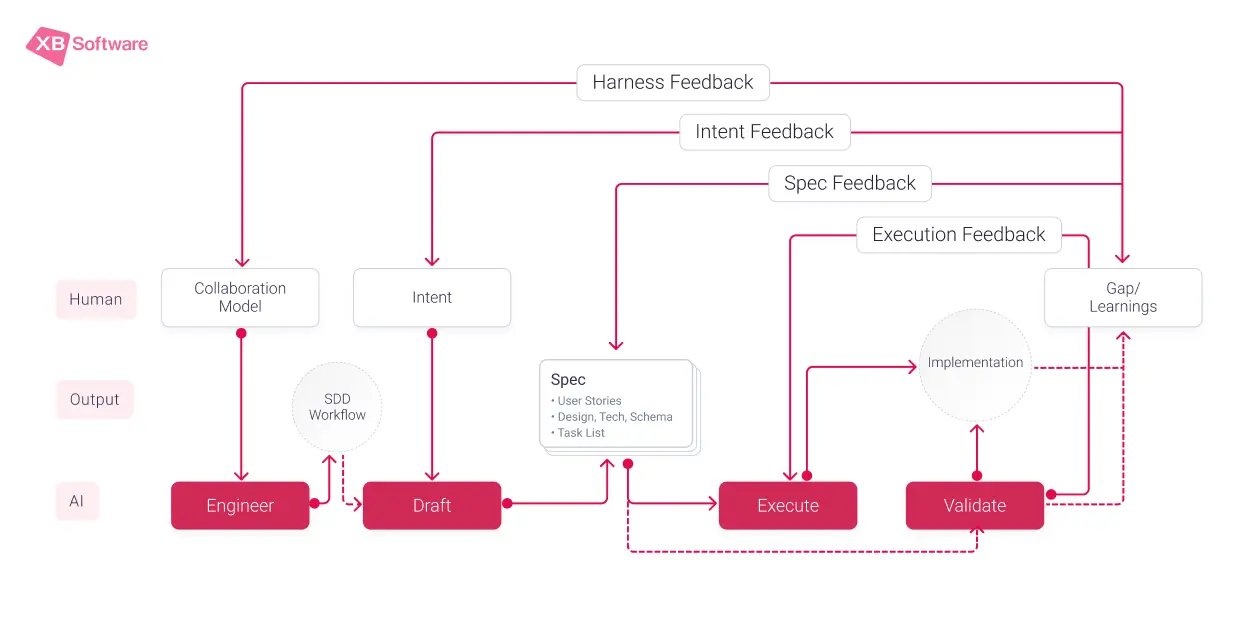
In the SDD approach, the team defines system behavior, business rules, APIs, data models, workflows, and acceptance criteria. AI assistants then use these specifications as the primary source of context during implementation.
- Complex software projects with evolving requirements
- Legacy system modernization and feature expansion
- Products requiring clear documentation and traceability
- Teams integrating AI into structured development workflows
AI Tools We've Conquered

Claude CLI

OpenAI API

Codex

GitHub Copilot

Cursor

MCP Tools

Ollama

SpecKit

Lovable

Figma AI

Grok

DeepSeek

DeepL

Fireflies.ai
Claude CLI
OpenAI API
Codex
GitHub Copilot
Cursor
MCP Tools
Ollama
SpecKit
Lovable
Figma AI
Grok
DeepSeek
DeepL
Fireflies.ai
Traditional Software Engineering Methodologies We Use
We employ a range of proven Agile and non-Agile methodologies to ensure that your solutions are delivered efficiently, on time, and to the highest standards. Primary methodologies of XB Software include Disciplined Agile Delivery (DAD), Kanban, and Waterfall.
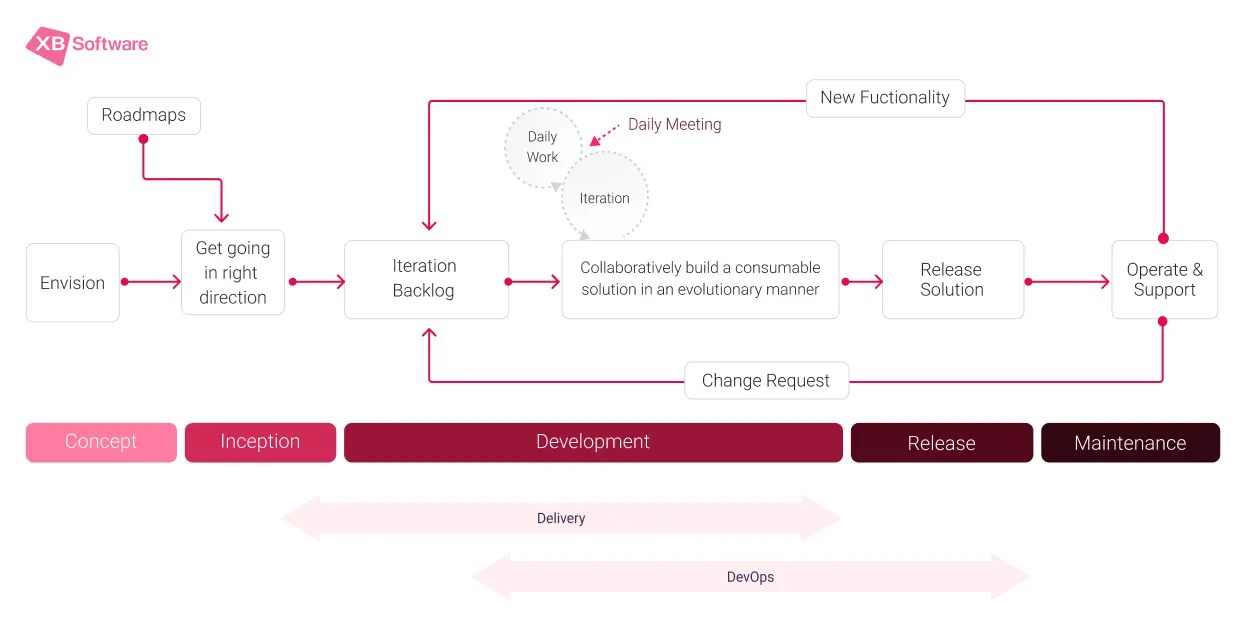
For most custom software projects, Disciplined Agile Delivery (DAD) provides guidance for architecture, governance, quality assurance, DevOps, security, and stakeholder collaboration.
- SaaS business platforms
- Digital product development
- Long-term software modernization
- Complex system integrations
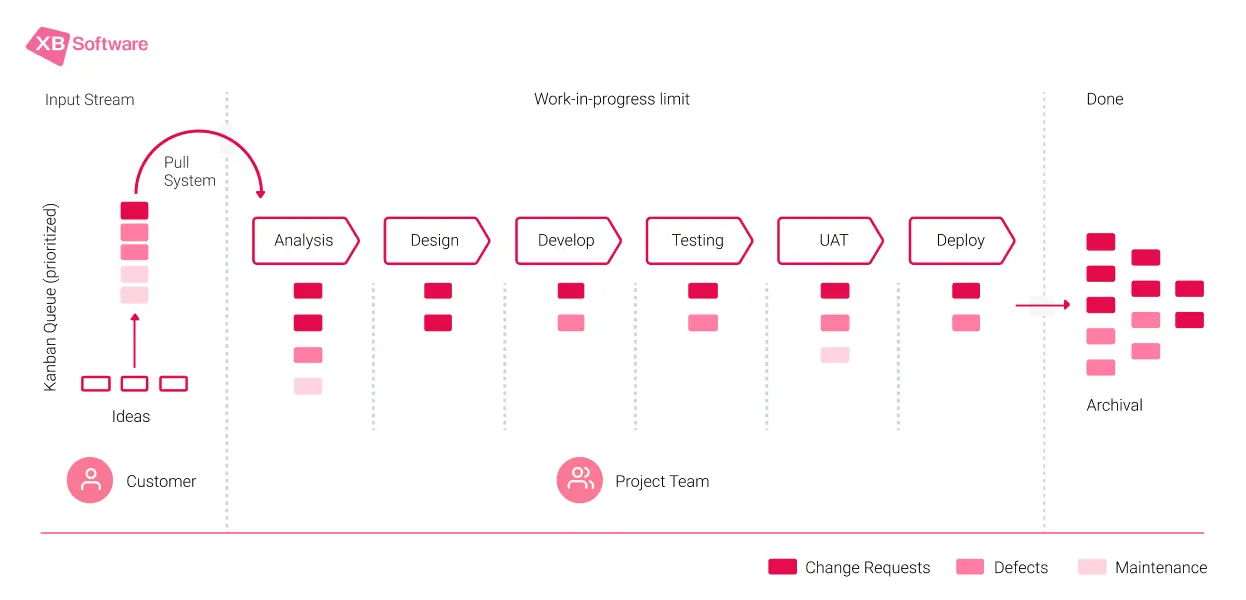
When business priorities change frequently or work arrives continuously, Kanban provides maximum flexibility with continuous delivery flow, allowing teams to prioritize new requests.
- Product support and maintenance
- Continuous feature delivery
- Dedicated development teams
- Operational improvements
For projects that require clearly defined project scope, predictable planning, formal approvals, and fixed documentation before implementation begins, Waterfall remains an effective delivery model.
- Government projects
- High compliance requirements
- Regulated industries
- Fixed-scope implementations
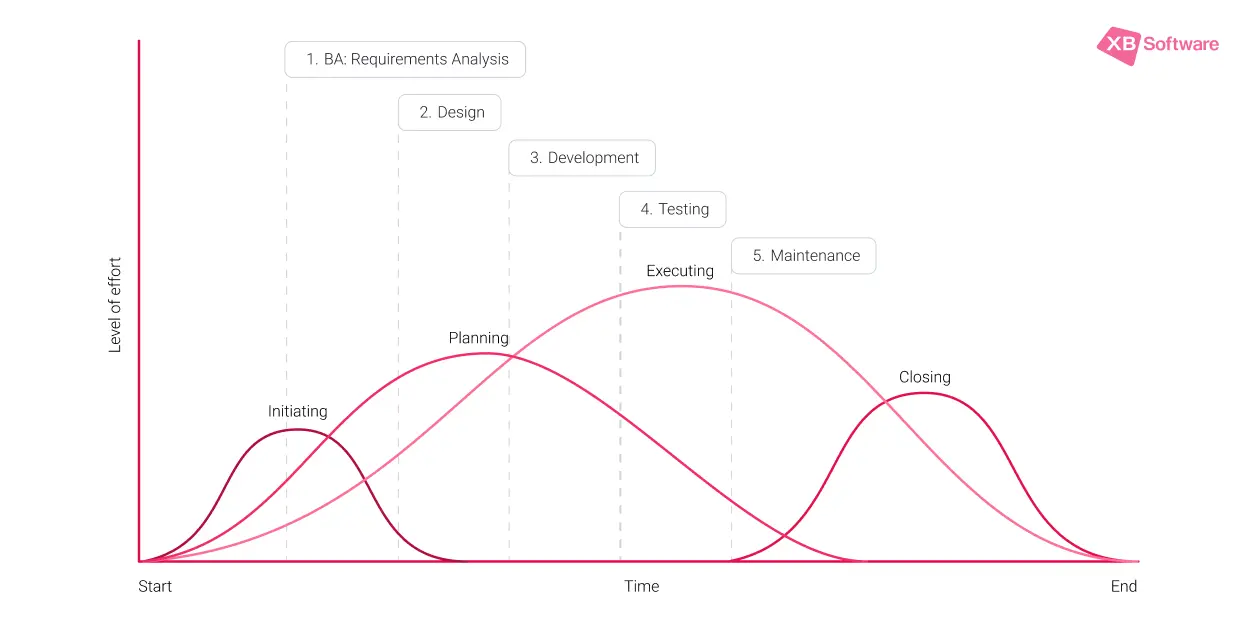
Choosing which delivery approach is right for your project?
We’ll suggest the methodology that best fits your product, business goals, technical environment, and level of project uncertainty.
How We Help During Full-Cycle Development Process
From the initial idea to long-term product evolution, XB Software supports every stage of the software development lifecycle. Our teams combine business analysis, software architecture, engineering, quality assurance, DevOps services, and project management to provide reliable custom software services aligned with your operational goals.
Discovery & Requirements Analysis
We start by analyzing your goals, workflows, users, and existing systems to define the right solution strategy.

- Define project goals and priorities
- Analyze requirements and workflows
- Evaluate technical options
- Create a clear development roadmap

- Product Requirements Document (PRD)
- Initial prototypes
- SRS document (if needed)
- Project roadmap and estimates
Solution Architecture & Planning
Before development starts, our technical experts design the architecture and technology approach that supports your current needs and future growth.
- Select tech stack and architecture
- Plan integrations and infrastructure
- Identify technical risks early
- Prepare a development strategy
- Technical architecture
- Technology recommendations
- Implementation plan
Software Development
Our engineers develop your solution in structured iterations, keeping you involved and ensuring priorities remain aligned with business needs.
- Develop frontend and backend
- Build APIs and system integrations
- Implement business logic and automation
- Use AI assistants where relevant
- Working software increments
- Source code
- Technical documentation
Quality Assurance & Testing
Quality is built into our process from the beginning. Our QA and software testing services include the validation of functionality, performance, security, and user experience.
- Test new features and integrations
- Identify and resolve defects
- Automate repetitive testing processes
- Prepare software for production release
- Test reports
- Verified releases
- Improved system stability
Deployment & Launch
We handle the technical steps required to launch your solution and ensure it is ready for real users.
- Configure production environments
- Deploy applications and databases
- Migrate data when needed
- Monitor system after release
- Production-ready software
- Deployment documentation
- User guidance
Maintenance & Continuous Improvement
After launch, we continue supporting your system to keep it secure, efficient, and ready for future changes.
- Fix issues and optimize performance
- Add new features and integrations
- Modernize outdated components
- Adapt software as needs change
- Ongoing improvements
- Technical support
- Software evolution roadmap
Our Recent Projects
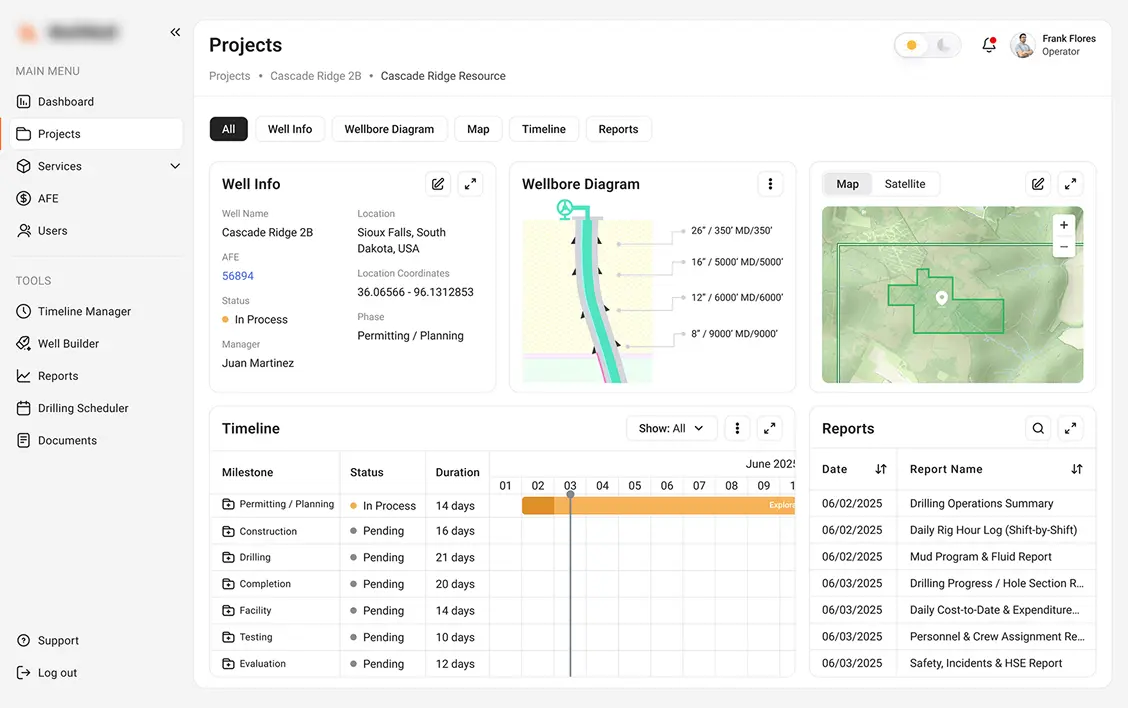
Cloud-Based SaaS Platform for Well Drilling
Custom drilling management software that unifies operations, real-time data, and resource planning for construction project lifecycle from site prep to facility setup.
Result
- Improved planning efficiency
- Cut admin overhead
- Accelerated budget management
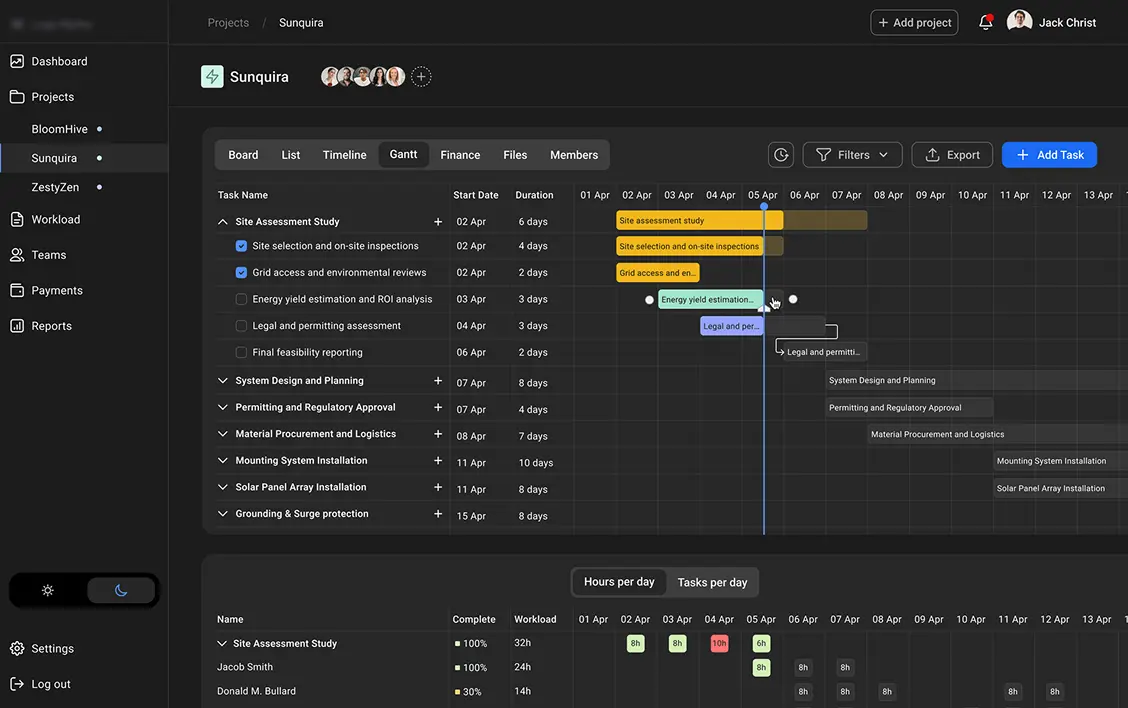
PM Gantt Chart Software for Solar Projects
Custom project management software for complex solar farm development and construction with project version historical tracking and real-time scheduling.
Result
- Accelerated project scaling
- Improved planning accuracy
- Streamlined financial and operational control
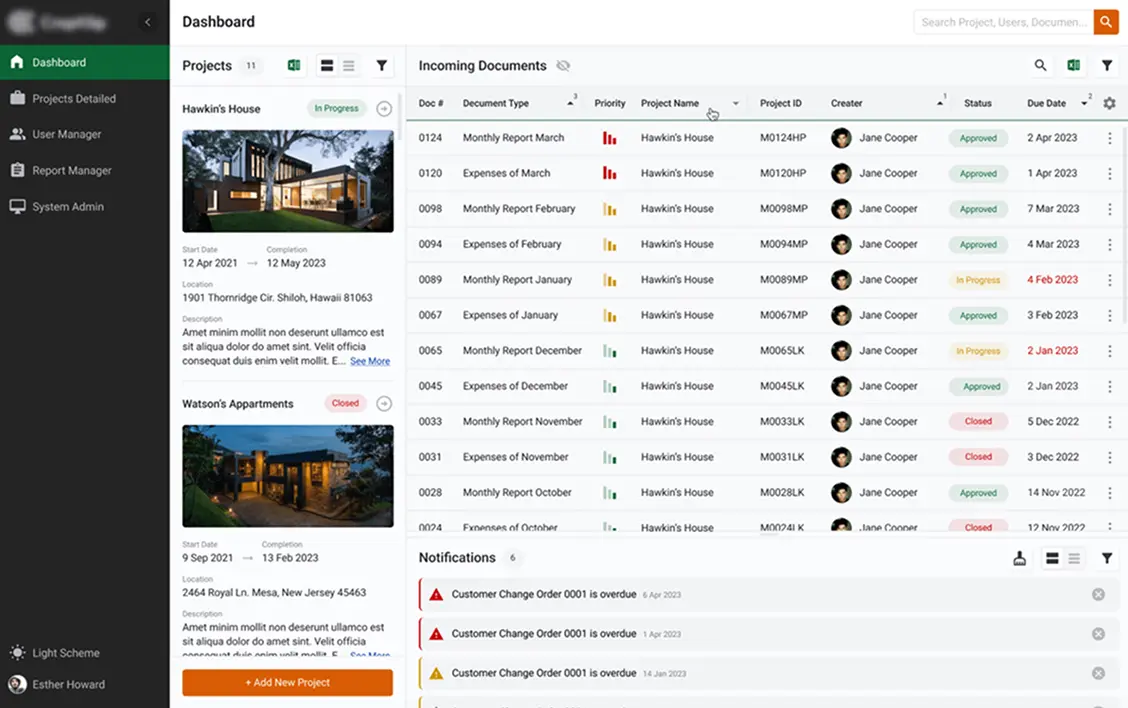
Modernized Data-Driven Construction Web App
Construction planning app modernized to allow switching between new and legacy versions of the frontend and ensure a smooth transition to new features.
Result
- Better user adoption
- Reduced onboarding time
- Modernized interface that matches today’s user expectations
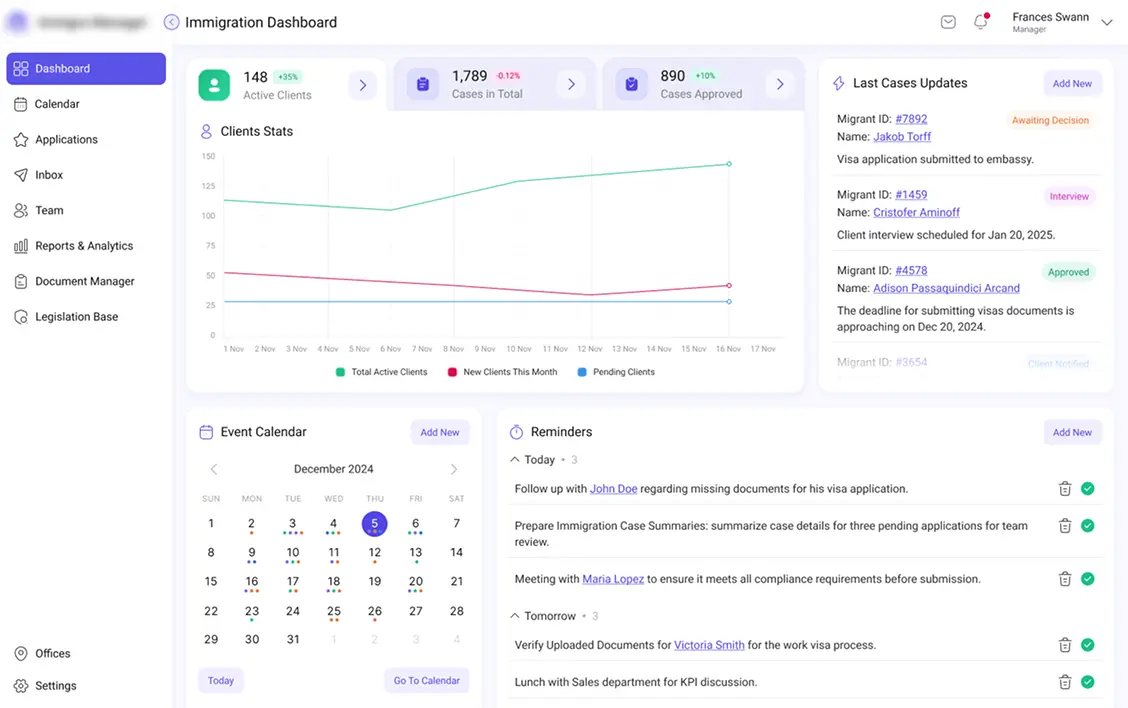
Visa & Immigration CRM for Travel Agency
Custom CRM solution designed to manage high volumes of visa applications, documents, and client interactions with automated workflows and centralized data storage.
Result
- Faster document processing
- Improved client service
- Streamlined operations and better data control
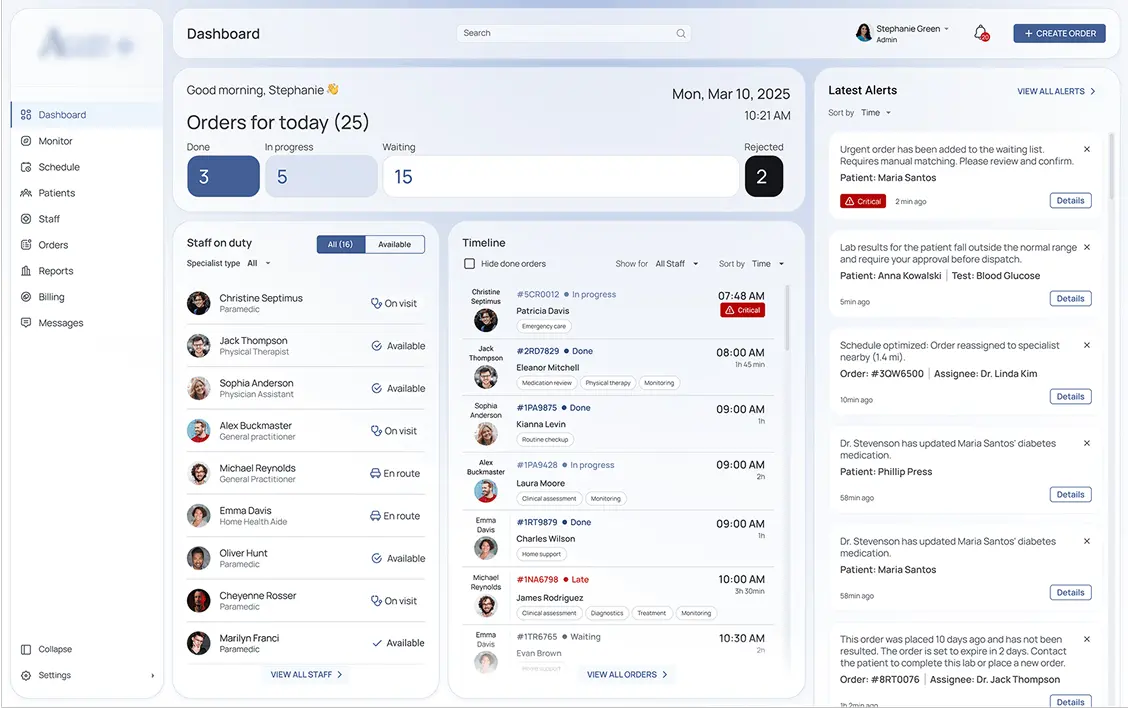
Ambulatory Care Workforce Management System
Custom workforce management solution designed to streamline staff scheduling, shift coordination, and resource allocation for ambulatory care providers.
Result
- Reduced administrative workload
- Improved staff utilization
- Faster response to scheduling gaps
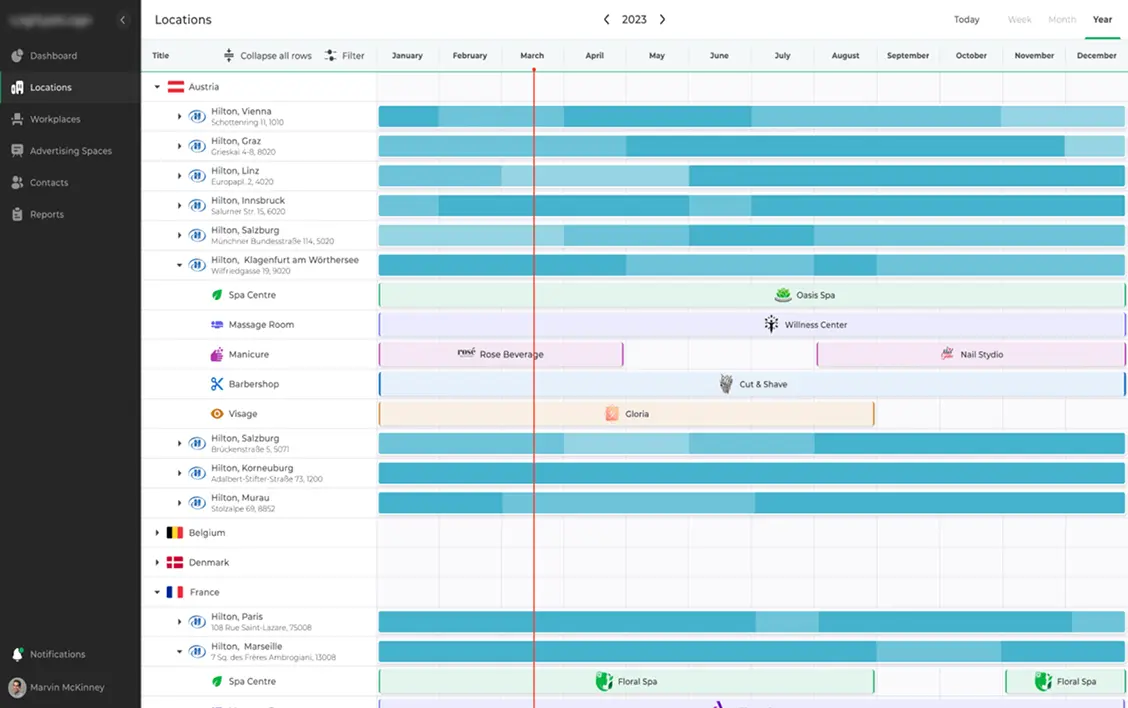
Gantt Widget for Salon Management Software
Custom Gantt-based scheduling component for staff availability visualization, appointments, and resource allocation in a single, interactive timeline.
Result
- Improved schedule visibility
- Fewer booking conflicts
- Faster day-to-day planning for salon managers
How XB Software Manages Delivery Risks
Rather than reacting to problems after they affect timelines or budgets, we build risk management into our engineering and delivery processes from the very beginning.
Poorly scalable architecture
Senior engineers review architecture, integrations, and technology choices early to ensure the solution remains maintainable as business requirements evolve.
01
Unclear scope
We continuously refine priorities together with stakeholders, keeping the roadmap aligned with changing business needs without losing visibility into budget or timelines.
02
Integration issues
External systems, APIs, and data dependencies are analyzed and validated throughout development instead of being left until final testing.
03
Delivery delays
Regular progress reviews, transparent reporting, and proactive risk discussions allow us to identify blockers before they impact release schedules.
04
Knowledge concentration
Project documentation, shared engineering practices, and collaborative code reviews reduce dependency on individual team members and improve long-term maintainability.
05
Technical debt
We review architectural decisions continuously and use AI-assisted engineering responsibly, ensuring speed does not come at the expense of software quality.
06
Types of Contracts We Offer
Fixed Price
A pricing model where the project cost is agreed upon in advance and remains unchanged throughout the entire lifecycle. It is suitable for projects with clearly defined requirements and limited changes.
Time & Materials
The cost is based on the time and resources spent, with the client paying for the actual hours worked and resources used. This model offers flexibility for projects with changing requirements or an uncertain scope of work.
BFS (Budget with Float Scope)
BFS approach involves a set budget for the project with some flexibility in the scope of work. The project team can adjust the scope within the allocated budget to accommodate necessary changes.
Outstaffing
When choosing our outstaffing services (IT outsourcing services, dedicated developers team, IT staff augmentation services), you add our specialists to your team to implement your project, which helps reduce business costs. Payment is made at a fixed rate.
- The contract type is chosen depending on the amount of work, availability of documentation, your wishes, uniqueness of the request, and understanding of the requirements for functionality.
- Work is usually divided into 2-4-week sprints and begins with the signing of an agreement by email.
- We guarantee you information privacy from a third party and offer to sign the NDA.
- You pay only for accepted results.
After the job is done, the whole warranty period and the bug-fixing procedure are at our own expense.
Need help picking the right engagement model?
Our consultants will map your project goals to the contract type that saves you the most time and money.
Quality and Security Standards We Follow
At XB Software, quality management and information security are part of our everyday engineering practices. Our ISO certifications demonstrate our commitment to reliable delivery, structured processes, and responsible handling of client information.
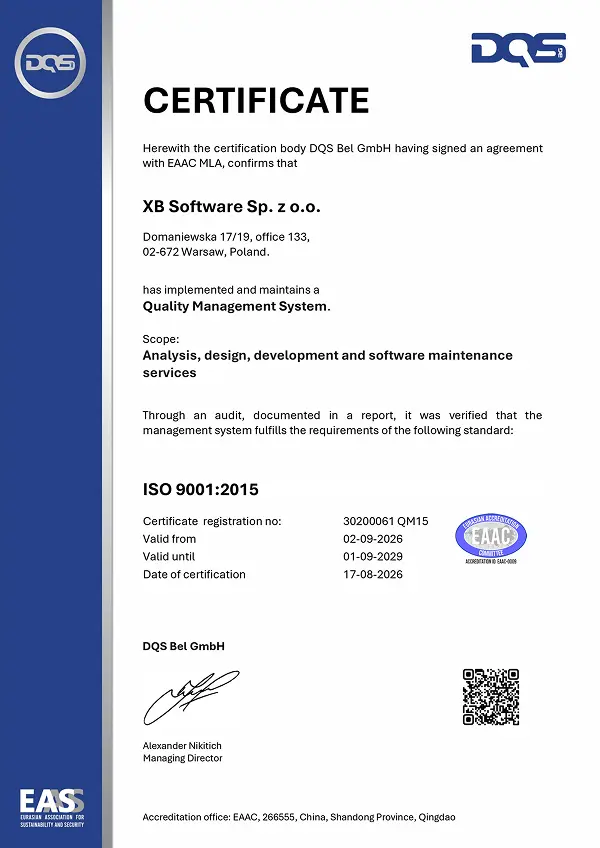
ISO 9001 — Quality Management
The ISO 9001 certification reflects our focus on consistent software delivery and continuous process improvement.
What it means for clients:
- Structured project management processes
- Consistent quality standards
- Transparent delivery workflows
- Continuous improvement practices
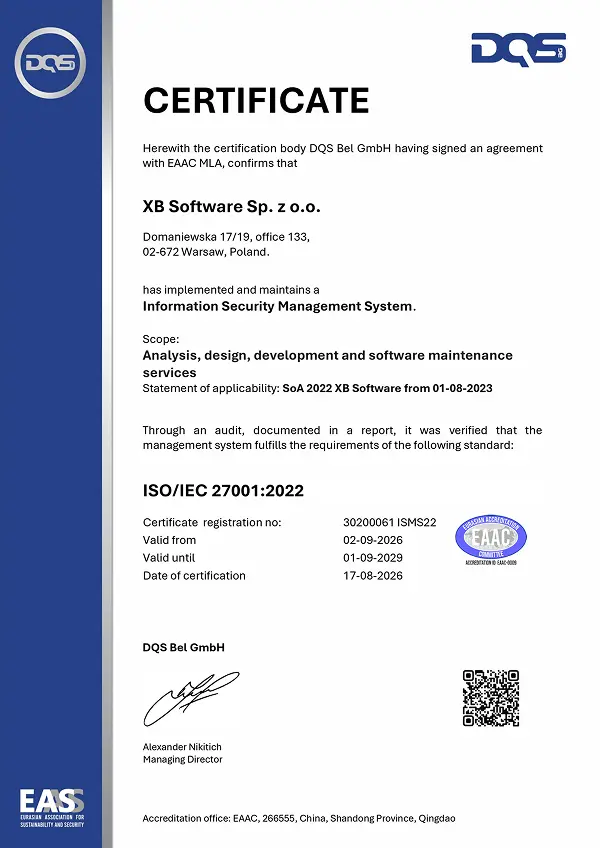
ISO/IEC 27001 — Information Security
The ISO/IEC 27001 certification confirms that we follow internationally recognized security practices to protect sensitive business information.
What it means for clients:
- Secure handling of project data
- Protection of intellectual property
- Controlled access to sensitive information
- Risk-based security management
Frequently Asked Questions
Can you work with our internal development team?
Yes. We frequently collaborate with internal engineering teams by extending development capacity, providing specialized expertise, modernizing specific system components, or taking ownership of clearly defined workstreams while integrating into existing delivery processes.
What technologies does XB Software specialize in?
We have expertise in modern web and mobile development, cloud, AI-assisted engineering, and DevOps. In our projects, we use JavaScript technologies, React, Node.js, Python, .NET, PHP, and other program languages and frameworks. We also develop and maintain systems by implementing Webix and DHTMLX ー two widely used JavaScript UI components.
How do you decide which development methodology is right for a project?
We don’t apply the same methodology to every project. The choice depends on business goals, project complexity, technical constraints, delivery timeline, regulatory requirements, and how frequently requirements are expected to change. In many cases, we combine methodologies to fit the project’s specific needs.
Can you adapt to our existing development process?
Yes. If your organization already follows Agile, Scrum, Kanban, Waterfall, or internal engineering practices, our team integrates into your existing delivery process. We adapt our workflows, communication, documentation, and reporting rather than requiring you to adopt ours.
How involved will our team need to be during development?
Your level of involvement depends on the engagement model. Some clients prefer regular planning and review meetings, while others delegate most delivery decisions to our team. In every case, we maintain transparent communication and involve stakeholders at key milestones and decision points.
How do you keep software quality high while using AI-assisted development?
AI supports repetitive engineering activities such as documentation, boilerplate generation, and implementation assistance. Architecture, business logic, security decisions, code reviews, testing, and final approvals always remain the responsibility of XB Software engineers.
What happens if project requirements change during development?
Requirement changes are a normal part of software projects. Depending on the selected delivery model, we assess their impact on scope, budget, priorities, and timeline before implementation. This allows stakeholders to make informed decisions while maintaining project transparency.
How do you reduce delivery risks on complex software projects?
Risk management begins during discovery. We validate architecture early, document requirements, review technical decisions, monitor delivery progress continuously, identify integration risks in advance, and maintain shared documentation to reduce dependency on individual team members.
How do we get started?
The first step is a conversation about your business objectives, existing systems, and current challenges. Based on that discussion, we recommend the most suitable engagement model, whether it’s product discovery, a dedicated engineering team, modernization, custom development, or extending an existing platform. Contact us to initiate a project.
Let’s Talk About Your Project
What's next?

Vitaly Hornik
COO at XB Software, Ph.D. in IT (Computer Science), PMP
We don’t just deliver projects — we build partnerships.
What's next?
Requirements
A sales manager will contact you to understand a vision.
01
Estimation
We provide a detailed plan, timeline, and cost estimate.
02
Agreement
We finalize the contract and begin working immediately.
03