Construction Workforce Scheduling Software for Residential Contractors
Construction project scheduling software with Gantt charts that replaced fragmented spreadsheets with centralized planning, subcontractor coordination, and real-time project visibility.
Business Challenge
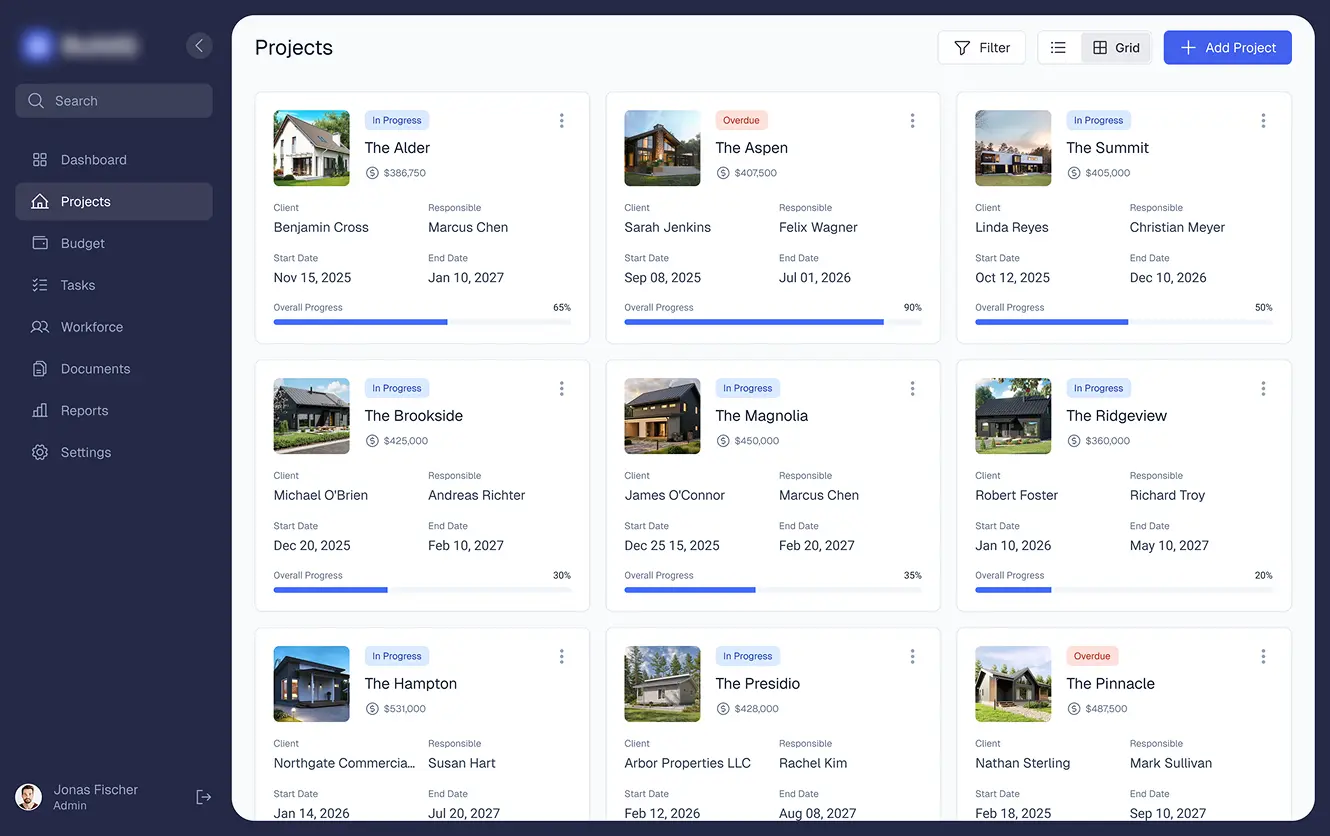
XB Software was approached by a mid-sized residential construction contractor operating in mountainous regions across Europe. As the client’s business expanded, operational coordination gradually became one of the company’s biggest delivery risks.
The company’s projects depended heavily on subcontractor sequencing and workforce availability. The contractor simultaneously managed 15-20 active residential construction sites across several mountainous regions, coordinating more than 120 subcontractor teams, regional supervisors, procurement staff, and project managers working under constantly shifting conditions.
The construction company understood that further scaling would become increasingly difficult without centralized operational visibility and more structured workforce coordination.
Disconnected information sources
Project timelines were maintained independently by coordinators, while subcontractors communicated schedule changes through calls and messaging threads.
Operations relied on manual processes
Milestone tracking depended heavily on manually updated Excel sheets, and even answering relatively simple duty questions often required manual verification.
Resource bottlenecks and delay-prone workfronts
The same subcontractor teams worked across multiple sites, making it difficult to identify scheduling conflicts, resource shortages, and delays early.
Off-the-shelf software mismatch
Generic CRM and project management systems couldn’t support construction workflows, while extensive customization proved costly and impractical.
Project in Facts
Industry
Construction / Residential Development
Region
Europe
Business
Medium-sized
Services
Key technologies
Solution
XB Software suggested developing a centralized construction project coordination platform tailored to the client’s real workflows. Rather than simply replacing spreadsheets, the solution became a daily workspace for project managers, site supervisors, and subcontractor coordinators.
To ensure successful adoption, we prioritized workflow simplicity, operational transparency, and immediate business value over unnecessary complexity, creating a scalable foundation for future platform expansion.
For XB Software, the project reinforced an important engineering principle: long-term product success usually depends less on technical extravagance and more on whether the platform integrates naturally into existing workflows, reduces coordination friction, and remains maintainable as operational complexity continues growing.
Sergey Filatov
Business Analyst at XB Software
Centralized Construction Project Planning
Workforce & Subcontractor Management
Operational Visibility & Audit Tracking
Centralized Construction Project Planning
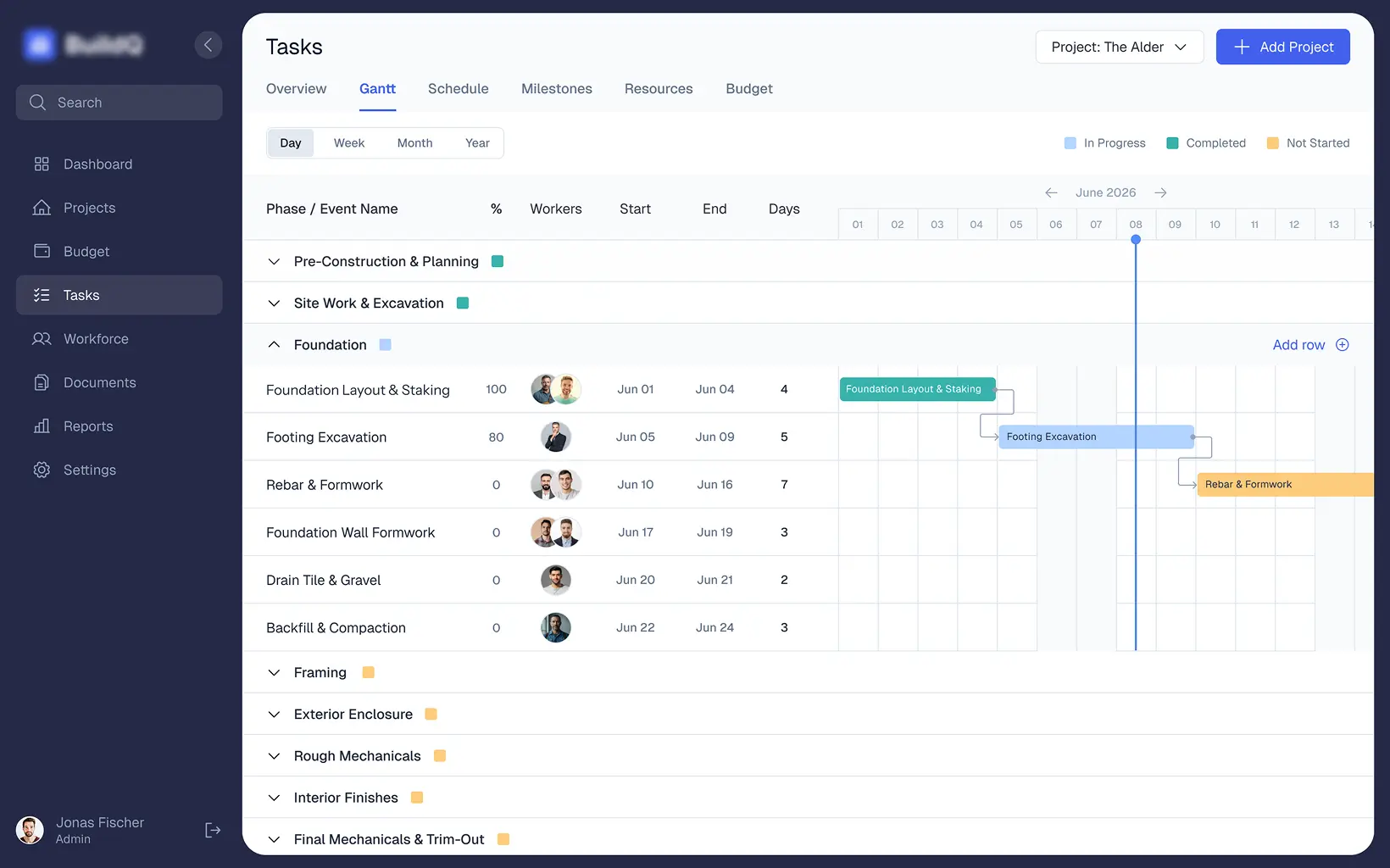
Custom construction system was designed around the real lifecycle of the industry projects, giving project managers a single workspace instead of disconnected spreadsheets and messaging threads. By centralizing planning, scheduling, and workforce coordination, the construction scheduling software made it easier to monitor project progress, identify risks earlier, and coordinate multiple construction sites from one interface.
Interactive Gantt-Based Planning
Project managers planned construction phases, milestones, dependencies, and work periods through an interactive timeline that became the primary workspace for daily task coordination instead of a static reporting dashboard.
Project & Milestone Management
Each project included configurable construction phases, milestone timelines, dependency chains, and progress tracking, allowing managers to quickly identify delayed activities.
Cross-Project Resource Visibility
Automatic synchronization eliminated the need to reconcile information from spreadsheets, phone calls, and messaging applications, helping managers to identify conflicts before they affected project delivery.
Workforce & Subcontractor Management
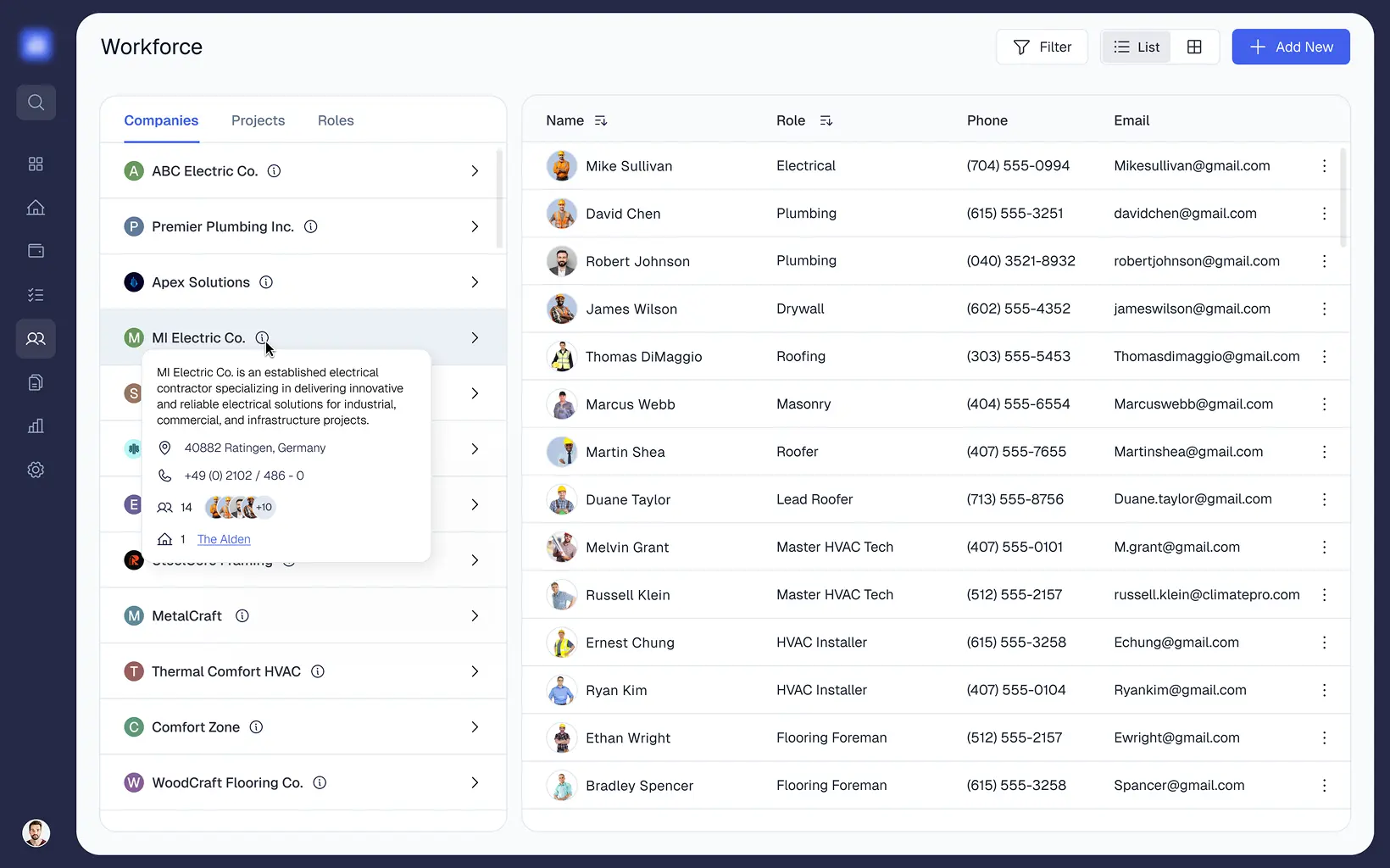
Coordinating subcontractors across multiple construction sites was one of the client’s biggest challenges. XB Software addressed this by providing workforce management software development services. The subcontractor management software solution provided complete visibility into subcontractor availability and assignments, enabling managers to reduce time spent on manual coordination.
Centralized Subcontractor Profiles
Project managers maintained detailed contractor records with specialization, workforce capacity, active assignments, availability windows, historical participation, and upcoming commitments, creating a single source of truth for workforce planning.
Construction Crew Allocation
Managers assigned subcontractor teams to specific project phases, defined planned work durations, and reserved specialized crews for future construction activities, improving planning accuracy across multiple projects.
Dynamic Workforce Rescheduling
When project timelines shifted because of weather, site readiness, or other external factors, subcontractor assignments could be updated quickly while automatically reflecting workforce availability across all active construction sites.
Operational Visibility & Audit Tracking
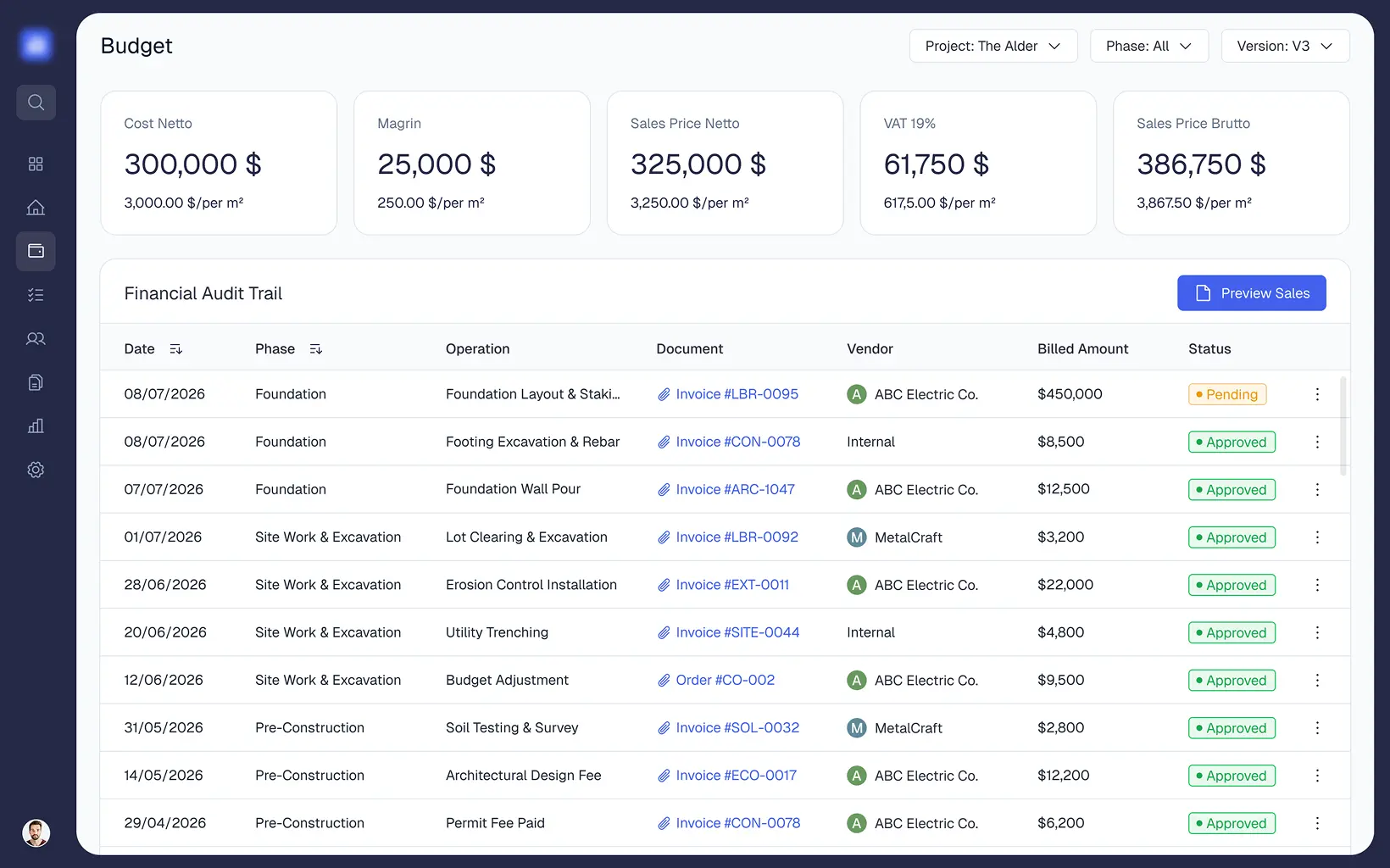
Construction projects involve constant schedule changes, resource reallocations, and milestone updates that can easily lead to misunderstandings between teams. XB Software introduced centralized audit tracking to provide a complete work history, giving every stakeholder access to accurate, up-to-date project information and reducing disputes caused by fragmented communication or outdated spreadsheets.
Complete Change History
Every milestone update, schedule modification, reassignment, dependency change, and deadline adjustment was automatically recorded, creating a transparent audit trail for all project activities.
Improved Accountability
Managers could quickly identify when changes occurred, what was modified, and who made the update, helping resolve coordination issues and reducing responsibility disputes between project teams.
Reliable Project Status Tracking
A centralized project history provided accurate visibility into project progress, enabling stakeholders to validate delivery status and make informed decisions based on current data rather than manual reports.
Tools and Technologies
The project was delivered through an outstaffing model, with the client’s internal team responsible for backend development while XB Software focused on providing frontend development services and improving workflows and user experience. Since the platform served as the primary workspace for construction coordinators, one of the main technical priorities was maintaining a fast and responsive interface despite continuously changing project schedules and large amounts of data.
The frontend was built using a modular architecture integrated with the client’s REST-based backend services. This approach allowed both teams to work independently while ensuring reliable communication between the interface and backend business logic.
The frontend architecture was also designed with long-term scalability in mind. Shared scheduling components, reusable dependency widgets, and modular workflow structures reduced code duplication, simplified future feature development, and made the platform easier to maintain as operational requirements evolved.
The construction project management software solution also leveraged React JS to accelerate the development of complex business interfaces, including data-intensive management screens and interactive workflows, while maintaining a consistent user experience across the application.
To help the client get the solution as soon as possible, XB Software recommended AI-assisted software development services. It accelerated the engineering process and maximized the project’s medium-budget constraints. Tools such as GitHub Copilot and Cursor were actively used for:
- boilerplate generation,
- CRUD implementation,
- interface scaffolding,
- permission structures,
- repetitive frontend logic,
- and component templating.
This allowed developers to spend significantly more time on operational workflows, scheduling logic, and architecture decisions rather than routine implementation overhead.
Interested in developing a similar solution or have your own idea in mind?
We are ready for any challenge, just contact us!
Result
The new construction workforce management software gave the client centralized operational visibility across all active construction sites, replacing fragmented spreadsheets, calls, and messaging threads with a single source of truth.
- 35-40% fewer subcontractor scheduling conflicts: Centralized workforce planning significantly reduced resource collisions across parallel construction projects.
- Reduced downtime between construction phases: Better visibility into milestone dependencies helped to minimize delays caused by workforce availability and schedule changes.
- Earlier identification of delivery risks: Coordinators could detect subcontractor overload, workforce gaps, and dependency conflicts several days before they affected downstream activities.
- Improved project coordination and visibility: Real-time project oversight and transparent scheduling reduced manual coordination, improved accountability, and helped teams to make faster decisions.
Let’s Talk About Your Project
What's next?

Vitaly Hornik
COO at XB Software, Ph.D. in IT (Computer Science), PMP
We don’t just deliver projects — we build partnerships.
What's next?
Requirements
A sales manager will contact you to understand a vision.
01
Estimation
We provide a detailed plan, timeline, and cost estimate.
02
Agreement
We finalize the contract and begin working immediately.
03