Workforce Management System for Oil & Gas Service Provider
A modernized workforce coordination system, built for a US-based oilfield service provider, that replaces spreadsheets, streamlines dispatching, and brings real-time visibility into crews, equipment, and field operations.
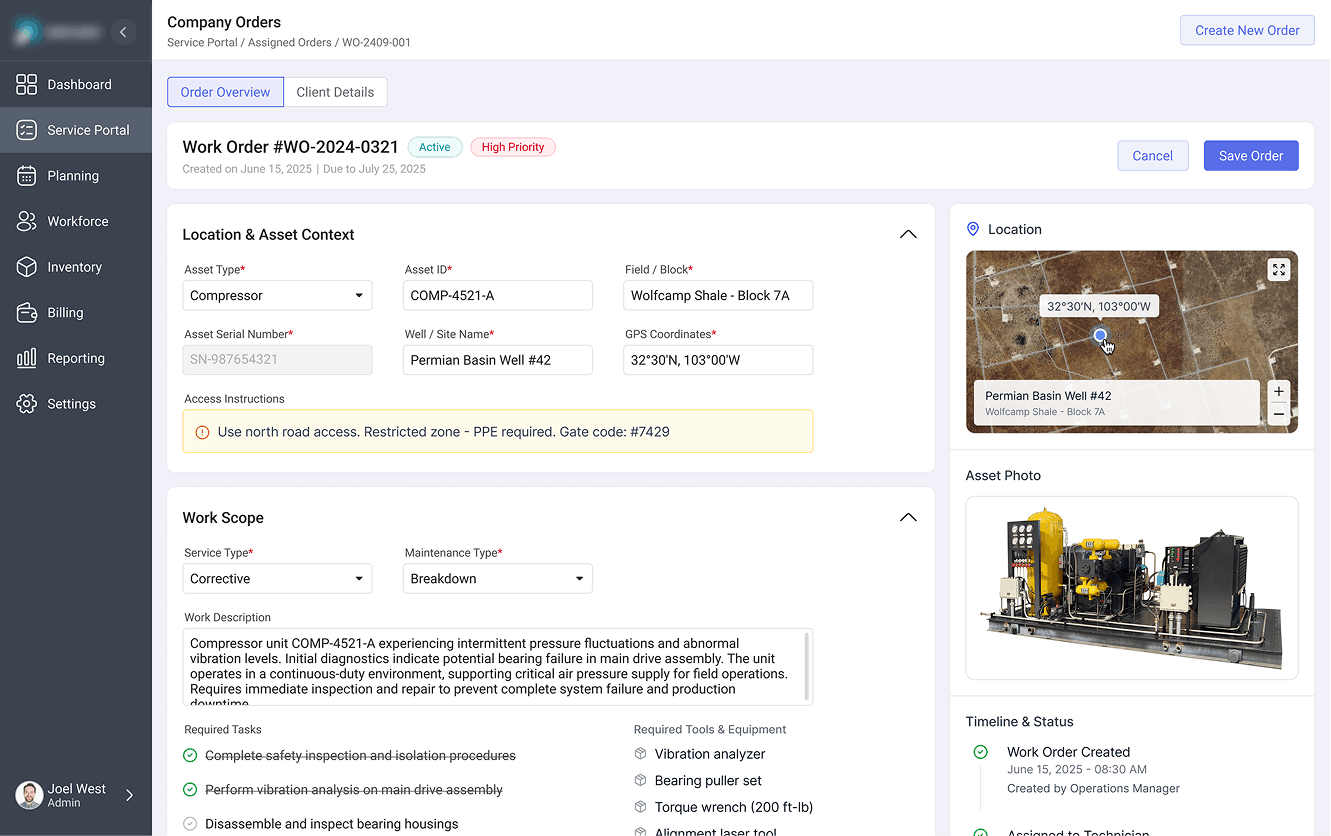
Business Challenge
Oil & gas service providers often manage multiple field jobs for different operators at the same time. Teams move between sites, equipment is shared across projects, and reporting must align with specific requirements.
Our client was a growing (from small- to medium-sized business) service provider specializing in oilfield logistics and crew deployment operations. For years, they relied on Excel, phone calls, and fragmented legacy tools to coordinate crews and assets. This worked when the company handled a few projects, but as they scaled, the system broke down.
The main issue was the lack of a centralized workforce management oil and gas system — a single operational layer that could connect scheduling, reporting, and resource allocation without starting anew and replacing everything they already used. We needed to modernize just enough to solve daily coordination problems, without triggering a costly, disruptive overhaul. Instead of building a full brand new ERP, the goal was to create a lightweight modernized operational system that sits on top of existing processes and solves day-to-day coordination problems.
Fragmented planning across spreadsheets and chats
Crew dispatching, vehicle allocation, and job coordination were managed through multiple Excel sheets and disconnected communication sources. Each dispatcher or manager maintained their own version of schedules, which quickly became outdated as changes occurred throughout the day.
Manual dispatching with no real visibility
Daily dispatching relied heavily on manual coordination and individual experience rather than a structured system. Managers had no single view of active crews, vehicle locations, or order progress across different sites. It was difficult to track who was already assigned, who was available, and which teams were nearing capacity.
Complex reporting requirements from operators
Staff had to submit detailed reports for completed work, often using operator-specific job codes and classification systems, but internal naming and categorization did not match these external standards. Each report required manual reconciliation — managers had to interpret completed work and match it to the correct operator codes.
No clear tracking of equipment and availability
Vehicles, tools, and field equipment were constantly moving between sites, but there was no centralized way to track their status or location. Information about whether an asset was in use, reserved, or available was often based on assumptions or outdated notes. Dispatchers sometimes assigned equipment that was already in use or unavailable, forcing last-minute changes and delays.
Project in Facts
Industry
Energy / Oil & Gas
Region
USA
Business
Medium-sized
Services
Key technologies
Solution
We developed a custom workforce coordination and management system tailored specifically for an oil and gas service provider’s workflow to focus on managing daily processes. The modernized system acts as a central operational hub that combines all legacy tools into one, helping dispatchers to plan work, assign crews, and track resources, while still allowing the company to keep their existing accounting and reporting tools.
A key part of the oil and gas workforce management system was handling reporting code mismatches between the service provider and operators. We implemented a mapping mechanism that automatically translates internal job codes into required formats during report generation.
The real mess was how everything lived in its own silo — workforce, logistics, compliance. None of it talked to each other. We needed one system that could handle all three at once, but also bend enough to handle whatever chaos the oilfield threw. And it still had to be fast and scale. No big deal, right?
Vitaly Hornik
COO at XB Software
Daily Planner
Workforce Training & Compliance Management
Inventory Management with GPS Tracking
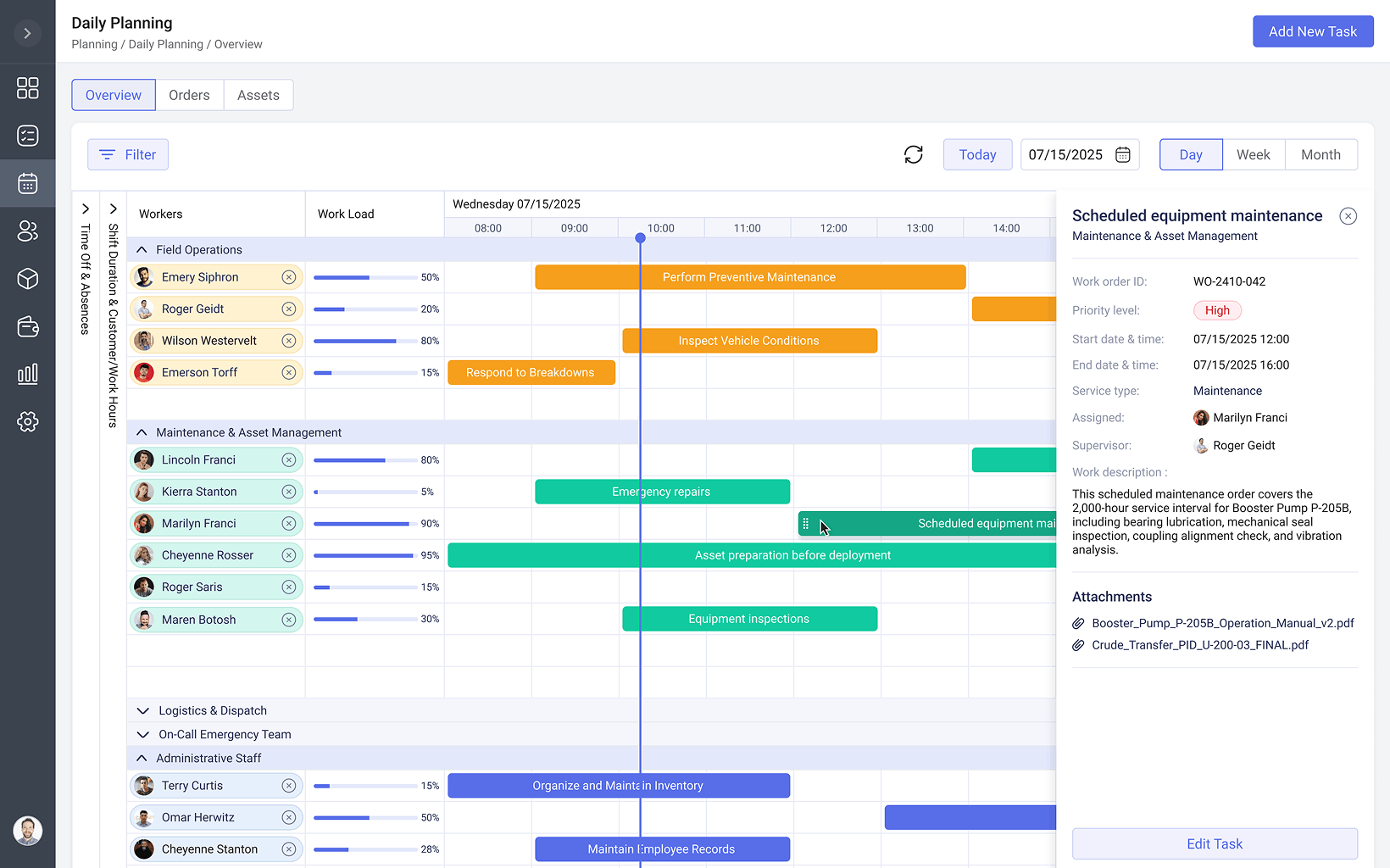
Daily Planner
To replace scattered spreadsheets and manual coordination, we implemented a visual daily planner that gives dispatchers a clear, real-time view of all processes. Instead of juggling multiple outdated tools, managers can now plan and adjust fieldwork in a single modernized interface.
Workforce & Resource Allocation
Dispatchers can assign crews, vehicles, and equipment to specific orders in just a few clicks. This eliminates back-and-forth communication and ensures everyone understands their responsibilities before arriving on-site.
Multi-Dimensional Scheduling
The planner supports multiple active jobs across different operators. Teams can be assigned partially, reassigned mid-project, or scheduled in phases depending on workload and order requirements.
Real-Time Adjustments & Scenario Handling
When plans change (and they always do), dispatchers can quickly reassign workers or equipment without breaking the overall schedule. Updates are immediately visible to the team.
Visual Planning & Workload Balancing
Managers can instantly see which crews are overloaded and which are available, helping them distribute work more efficiently and avoid burnout or underutilization.
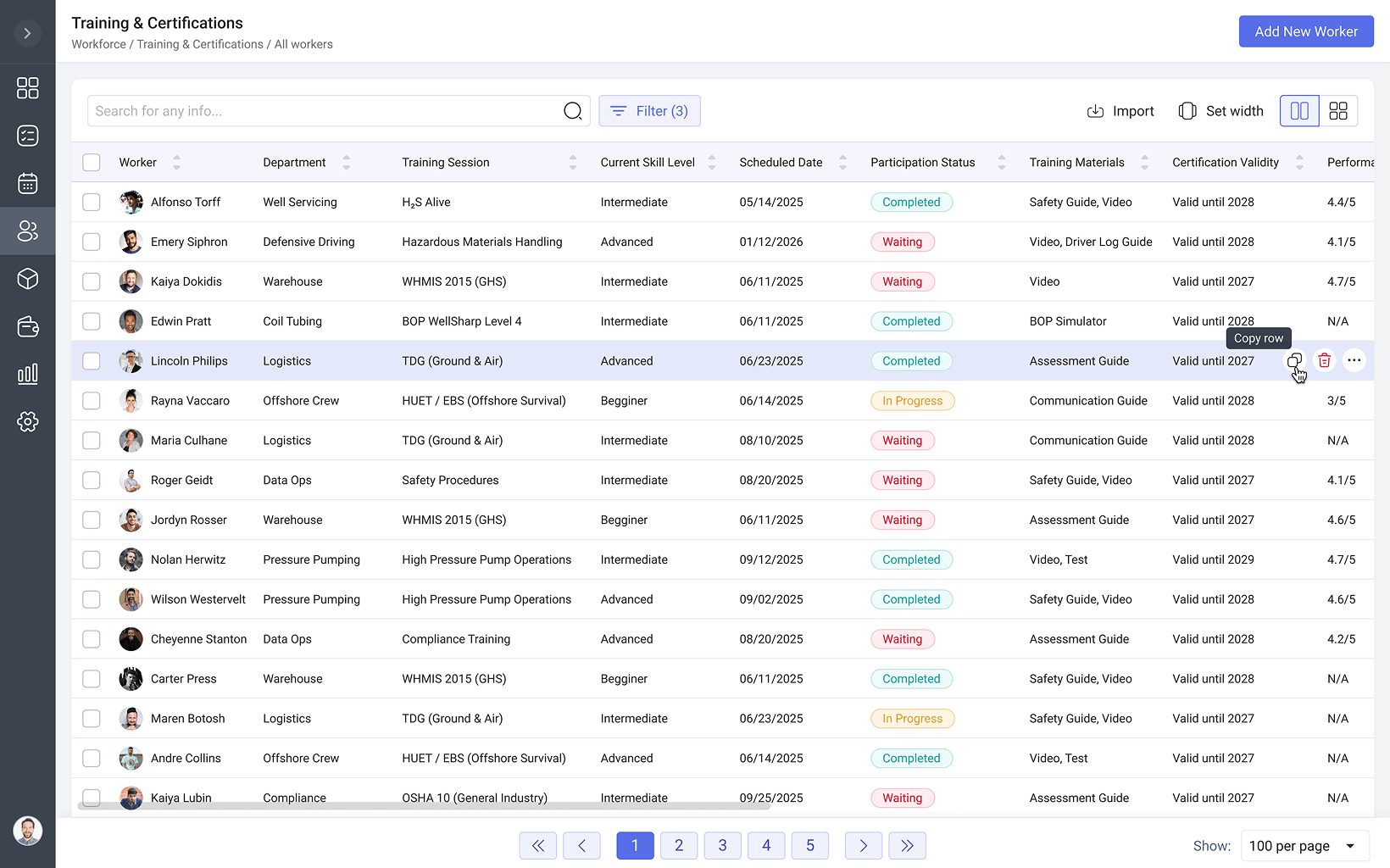
Workforce Training & Compliance Management
We introduced a simple but effective module to track employee qualifications and ensure compliance without adding administrative overhead.
Training Tracking
Managers can monitor which employees have completed required training and who needs certification updates before being assigned to specific orders.
Certification & Expiration Control
The oil and gas workforce system tracks all employee certifications, licenses, and permits, automatically notifying responsible teams about upcoming expirations to prevent compliance gaps and ensures that only certified personnel are assigned to specific tasks.
Automated Compliance Validation
When assigning employees to tasks, the system can validate whether they meet all required qualifications and restrictions. This reduces human error and eliminates the risk of assigning unqualified personnel to critical operations.
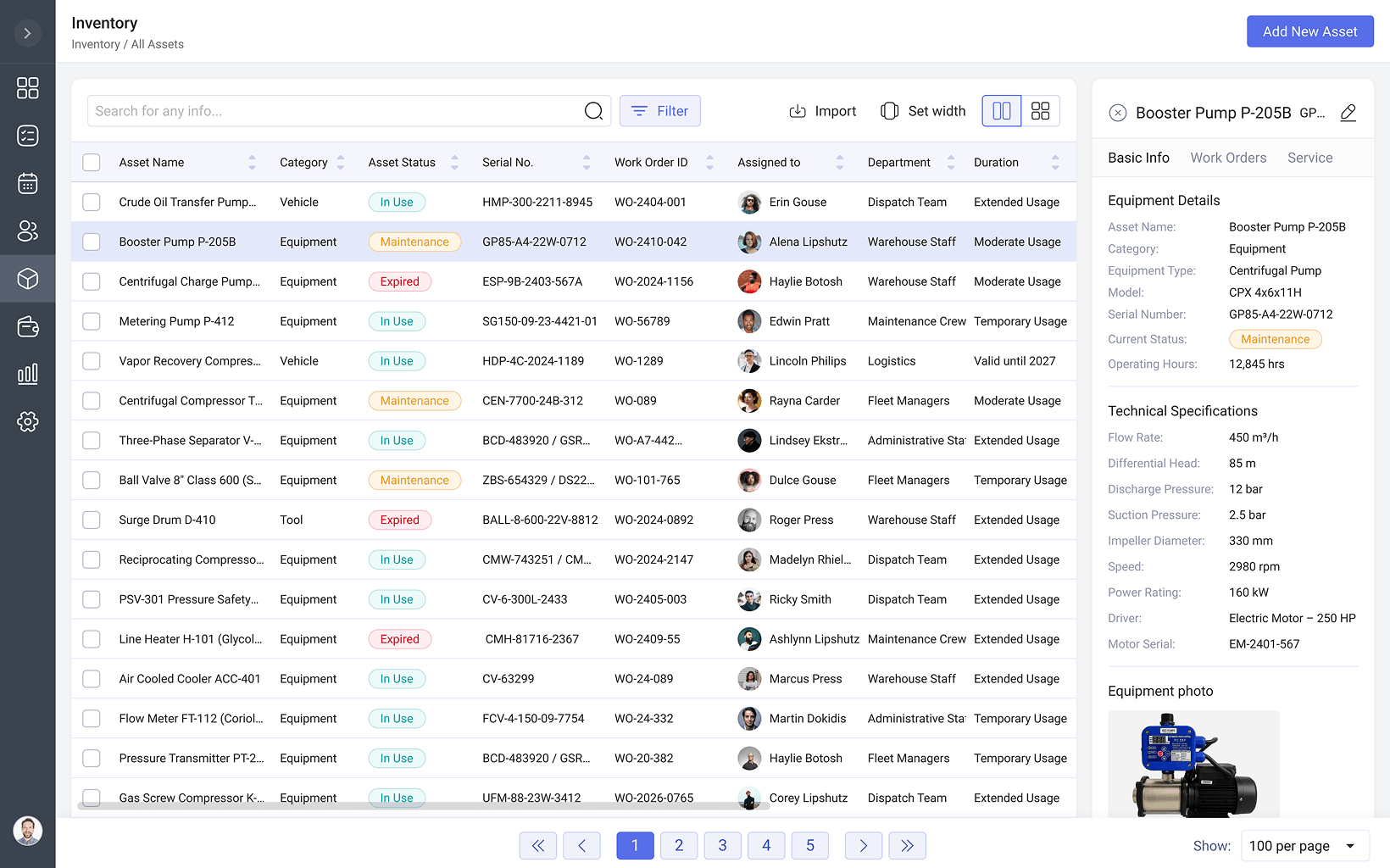
Inventory Management with GPS Tracking
To eliminate guesswork around equipment availability, we developed an advanced inventory and asset management system that provides full visibility into company resources and integrates directly with workforce planning and oil and gas operations.
Asset Status & Maintenance History Tracking
Managers can monitor the current status of each asset and check when it needs maintenance. This ensures accurate planning and prevents assigning unavailable or non-operational equipment.
Assignment & Location Management
The system allows to track which employee or department is responsible for each asset, along with its current location across sites.
GPS Tracking Integration
Optional GPS tracking enables real-time monitoring of assets in the field. Managers can track movement, optimize usage, and respond quickly to unexpected situations — a key capability in dynamic, remote processes.
Tools and Technologies
We intentionally selected a lightweight, flexible tech stack for the modernized oil and gas workforce management system to match the client’s needs — fast, responsive, and easy to evolve.
The frontend was built using React.js and enhanced with DHTMLX UI components, allowing the client to have highly interactive scheduling and grid-based interfaces without unnecessary complexity. The use of JavaScript Scheduler was especially critical for implementing complex planning scenarios with real-time updates.
On the backend, Node.js ensured fast processing of scheduling data and real-time updates, which are critical for dispatch-heavy workflows. REST APIs allowed the system to integrate with existing tools, rather than replace them, keeping the architecture flexible.
The solution was deployed on AWS, ensuring reliability and scalability as the company continues to grow.


Interested in developing a similar solution or have your own idea in mind?
We are ready for any challenge, just contact us!
Result
The system gave the client exactly what they were missing: clarity in daily tasks without overcomplicating their workflow. Instead of replacing existing tools, we added a focused layer that improved coordination, visibility, and control.
- 30% faster dispatching and planning due to centralized scheduling.
- 20-25% reduction in coordination errors caused by fragmented legacy tools.
- 40% less time spent on reporting preparation thanks to automated code mapping.
- Full visibility into workforce and equipment allocation across active orders.
- Scalable operations without switching to heavy ERP systems.
Let’s Talk About Your Project
What's next?

Vitaly Hornik
COO at XB Software, Ph.D. in IT (Computer Science), PMP
We don’t just deliver projects — we build partnerships.
What's next?
Requirements
A sales manager will contact you to understand a vision.
01
Estimation
We provide a detailed plan, timeline, and cost estimate.
02
Agreement
We finalize the contract and begin working immediately.
03