Summary
Oil & gas scheduling is complex, involving workforce coordination, equipment availability, compliance, and real-time decision-making across remote operations. The article explores six key scheduling challenges companies face and how modernized oil and gas scheduling software helps reduce downtime, improve efficiency, and align operations. Learn how digital solutions transform reactive planning into intelligent, data-driven scheduling.
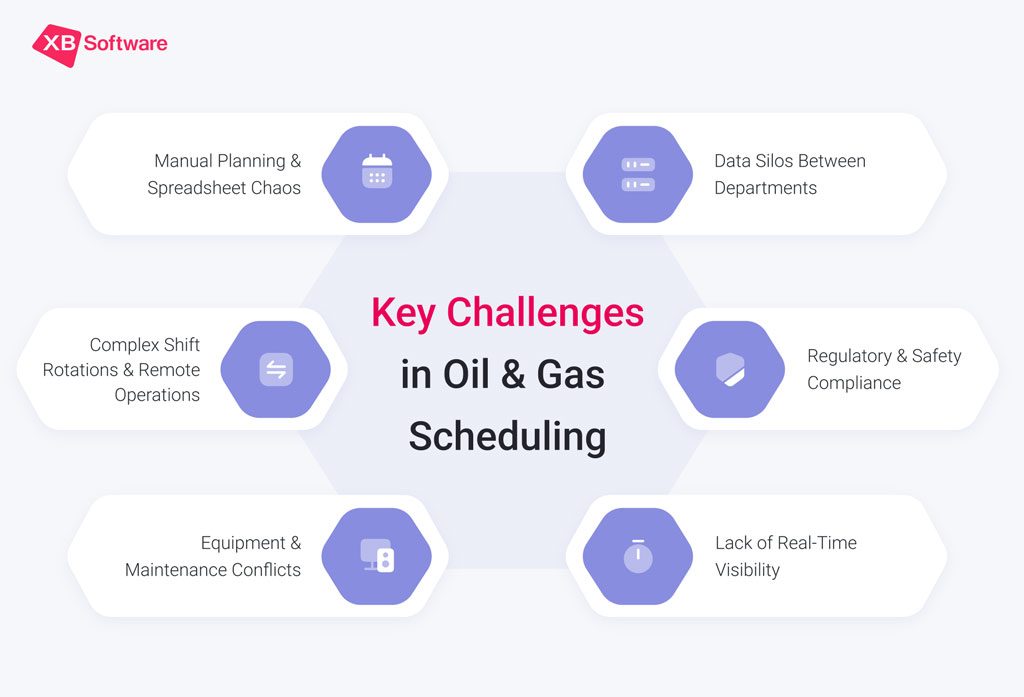
Oil and gas operations are among the most complex and high-risk environments. From upstream drilling sites to downstream processing facilities, companies must coordinate people, equipment, and processes across multiple remote locations. Often under strict regulatory requirements and tight deadlines. According to industry benchmarks, just one hour of downtime in upstream operations can cost tens or even hundreds of thousands of dollars.
Despite the scale and complexity of current energy operations, many companies still rely on manual scheduling processes, disconnected tools, and outdated systems. This is where custom oil and gas scheduling software solutions are transforming how companies plan, execute, and optimize operations.
Challenge #1: Manual Planning & Spreadsheet Chaos
There are oil & gas organizations that still depend on Excel-based crew scheduling, whiteboards in field offices, and manual coordination between teams. These approaches are difficult to scale and prone to human error, especially in large operations involving multiple crews and assets.
At first glance, these tools and approaches seem flexible and easy to use. But as procedures grow (more rigs, more crews, more locations) they quickly become a bottleneck. The core issue is that manual systems:
- Do not provide real-time updates across teams;
- Are highly dependent on human input and discipline;
- Lack visibility across locations and departments;
- Cannot handle complex dependencies between workforce, assets, and timelines.
In environments where scheduling decisions must account for certifications, fatigue rules, equipment availability, and logistics, spreadsheets simply aren’t designed to manage that level of complexity.
How Software Solves It
Custom oilfield scheduling software transforms scheduling from a manual, reactive process into an automated and intelligent system. Key capabilities include:
- Automated workforce scheduling in oil and gas: Assign crews based on availability, qualifications, location, and compliance requirements without manual calculations;
- Drag-and-drop planning interfaces: Visual scheduling boards allow dispatchers to quickly adjust plans, reassign crews, and respond to changes in seconds;
- Real-time crew availability tracking: Instantly see who is available, on shift, in transit, or unavailable due to rest periods, training, or leave;
- Intelligent conflict detection: The system automatically flags double bookings, missing certifications, or scheduling overlaps before they become real issues;
- Scenario planning and forecasting: Simulate different scheduling scenarios to optimize workforce allocation and reduce downtime;
- Centralized access across teams: Everyone (from field managers to HQ) works from the same up-to-date data.
By implementing field service scheduling software for the oil industry, companies move from reactive firefighting to proactive planning. The result is fewer errors, faster scheduling cycles, and significantly improved process efficiency across the entire organization.
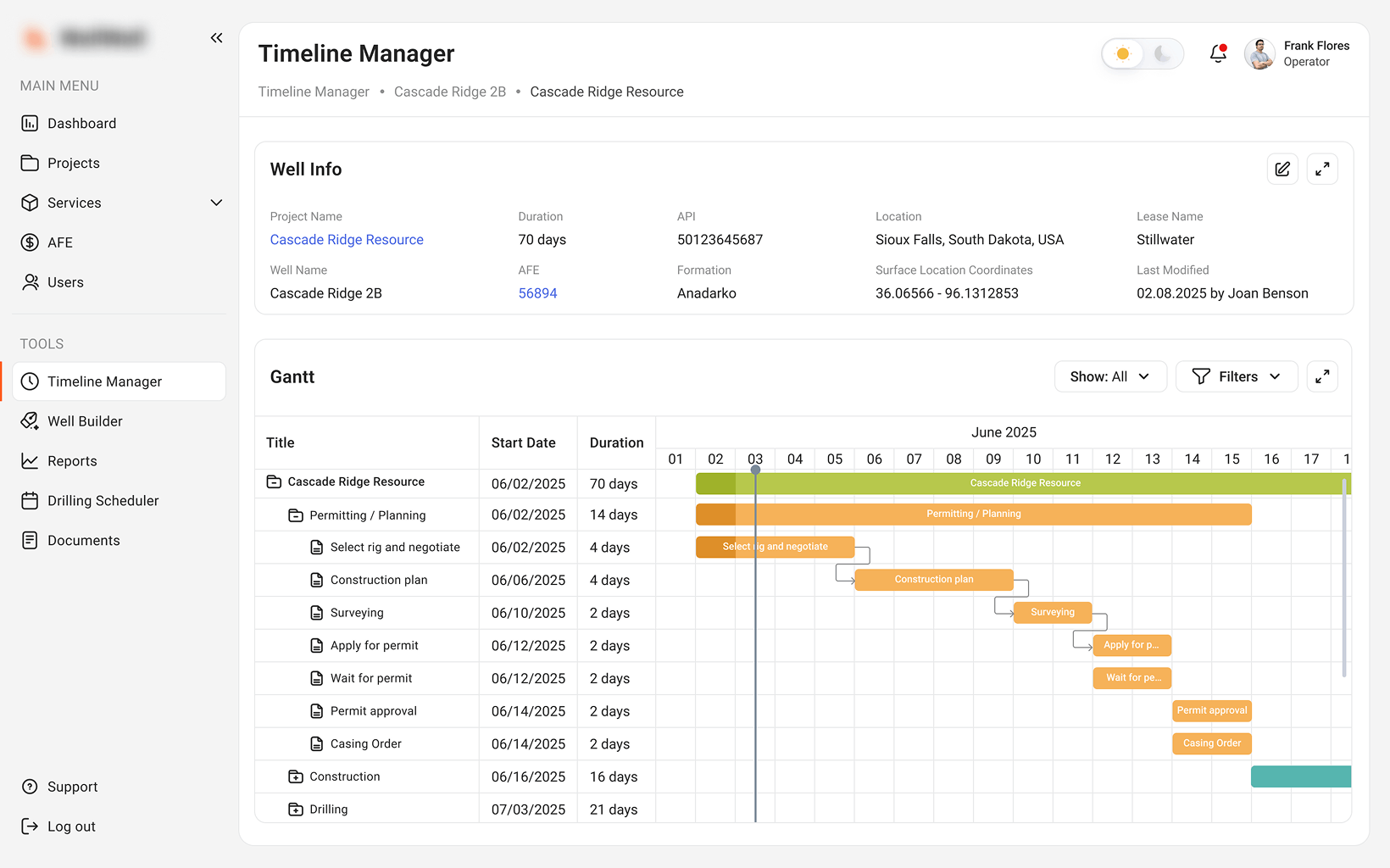
Case study: Cloud-Based SaaS Platform for Well Drilling & Construction Management
Challenge #2: Data Silos Between Departments
In many oil & gas companies, scheduling is still not owned by a single system and is fragmented across departments. HR manages workforce availability and certifications, operators handle dispatch and daily planning, maintenance teams track equipment readiness, and finance department monitors contracts and costs. Each of these functions often relies on separate tools that don’t communicate effectively.
At a glance, everything may seem under control within each department. But the real problem appears when these disconnected data sources need to work together. Without a unified view, energy project teams are making decisions based on incomplete or outdated information.
This leads to several critical issues:
- Workforce is scheduled without considering equipment availability or maintenance windows;
- Maintenance activities are planned without alignment with production schedules;
- Dispatch decisions are made without full visibility into crew readiness or compliance status;
- Reporting becomes delayed and inconsistent, making it difficult to rely on data for decision-making.
In high-stakes environments like upstream processes and drilling activities, this lack of synchronization can result in costly downtime, inefficient resource utilization, and increased operational risk.
How Software Solves It
Custom oil and gas scheduling software eliminates data silos by creating a centralized, integrated environment where all operational data is connected and accessible in real time:
- Unified scheduling platform: Combines workforce scheduling, asset availability, and operational planning into a single system, ensuring all teams work with the same data;
- Integration with enterprise systems: Seamless connection with ERP, oil and gas asset management software, maintenance planning systems, and logistics tools to synchronize data across departments;
- Real-time data synchronization: Updates across systems happen instantly, ensuring decisions are always based on current information;
- Centralized dashboards and reporting: Provides a holistic view of operations, including workforce status, asset utilization, and scheduling conflicts;
- Improved cross-team collaboration: Enables HR, operators, and maintenance teams to coordinate effectively without relying on manual communication or data transfers.
By implementing integrated oil and gas operations management software, companies can align workforce scheduling with asset readiness, maintenance planning, and production goals. This creates more coordinated, transparent, and efficient processes, reducing delays, improving decision-making, and minimizing costly misalignment between teams.
Read Also Dangers of Data Silos And Efficient Strategies for Eliminating Them
Challenge #3: Complex Shift Rotations & Remote Operations
Oil & gas procedures rarely follow a standard 9-to-5 schedule. Offshore platforms, drilling sites, and remote facilities depend on complex rotation models (such as 14/14 or 21/21 shifts), long-distance travel logistics, and strict fatigue management rules. On top of that, companies must consider visa restrictions, certifications, and unexpected absences.
Managing all of this manually quickly becomes overwhelming. Even a small miscalculation can result in:
- Non-compliant shift assignments due to fatigue or certification gaps;
- Last-minute replacements that increase operational costs;
- Crew burnout caused by poor rotation planning;
- Delays in processes due to unavailable or improperly scheduled personnel.
In remote environments, where replacing a worker isn’t as simple as calling someone in, these inefficiencies can significantly disrupt operations.
How Software Solves It
Advanced oilfield workforce management software brings structure and predictability to even the most complex scheduling scenarios:
- Predefined rotation templates: Easily configure and reuse rotation patterns for offshore and remote teams;
- Automated compliance checks: Ensure schedules meet fatigue management rules, certification requirements, and labor regulations;
- Credential and permit tracking: Automatically verify that assigned personnel meet all legal and operational requirements;
- Predictive workforce planning: Anticipate availability gaps and plan replacements in advance;
- Travel and logistics coordination: Align crew schedules with transportation and accommodation planning.
With workforce scheduling in oil and gas supported by intelligent systems, companies reduce risk, improve employee well-being, and maintain uninterrupted procedures even in the most challenging environments.
Challenge #4: Regulatory & Safety Compliance
The oil & gas industry operates under strict regulatory frameworks, where safety and compliance are non-negotiable. Companies must continuously track certifications, training, inspections, and environmental requirements — often across multiple locations and jurisdictions.
When compliance is managed manually or across disconnected systems, it creates serious risks:
- Expired certifications leading to non-compliant workforce deployment;
- Missed inspections or maintenance windows;
- Incomplete audit trails during regulatory checks;
- Increased likelihood of safety incidents and legal penalties.
In such a high-risk industry, even minor compliance gaps can lead to significant financial losses and reputational damage.
How Software Solves It
Upgraded oil and gas compliance management software embeds compliance directly into scheduling and operational workflows:
- Automated certification tracking: Monitor employee qualifications and receive alerts before they expire;
- Integrated inspection scheduling: Align equipment inspections and safety checks with operational plans;
- Digital audit logs: Maintain complete, traceable records for audits and regulatory reporting;
- Document management systems: Store and manage safety protocols, permits, and compliance documentation in one place;
- Risk management integration: Connect compliance data with broader risk management software in oil and gas environments.
By automating compliance processes, companies reduce human error, ensure regulatory readiness, and create safer working conditions across all processes.
Challenge #5: Equipment & Maintenance Conflicts
In oil & gas, workforce scheduling cannot exist separately from asset availability. Crews may be ready to work, but if critical equipment is under maintenance or unexpectedly unavailable, operations come to a halt. Without a structured maintenance planning system, companies often face:
- Crews assigned to jobs where equipment is not ready;
- Maintenance activities overlapping with production schedules;
- Unplanned downtime due to lack of visibility into asset status;
- Inefficient use of both workforce and equipment.
These issues become even more complex in environments where power system maintenance planning, drilling equipment servicing, or offshore asset upkeep must be tightly coordinated. In many organizations, maintenance is still managed through disconnected tools rather than a centralized maintenance management system, which leads to constant misalignment between operations and maintenance teams.
How Software Solves It
Modernized planned maintenance software and scheduling platforms bring workforce and asset planning into a single ecosystem, ensuring full operational alignment:
- Integrated maintenance planning and scheduling: Сonnect workforce schedules with maintenance timelines — all activities are synchronized to avoid conflicts.
- Planned Maintenance System (PMS) Integration: Manage inspections, servicing, and repairs alongside operational schedules, which is especially critical for offshore environments using a planned maintenance system for vessels or ships, where downtime is extremely costly.
- Real-time asset availability tracking: Get live visibility into equipment status, where teams can instantly see whether assets are operational, under maintenance, or scheduled for service.
- Equipment booking and resource coordination: Reserve both crews and equipment simultaneously, eliminating scheduling conflicts before they happen.
By integrating maintenance planning with scheduling, companies can minimize downtime, extend asset lifespan, and ensure that both people and equipment are used efficiently.

Manual spreadsheets, data silos, and remote logistics directly impact our clients’ bottom lines. We build solutions to replace fragmented tools with unified scheduling that automates workforce assignments, integrates maintenance planning, and embeds real-time compliance tracking.
This shift from reactive planning to centralized, data-driven operations ensures certified crews and assets are aligned across sites, reducing downtime and protecting revenue.
Challenge #6: Lack of Real-Time Visibility
In fast-moving oilfield operations, decisions must often be made instantly. However, many companies still rely on delayed reports, manual updates, or fragmented communication channels to understand what’s happening on the ground.
This lack of real-time visibility creates multiple challenges:
- Dispatchers are unaware of delays or changes in the field;
- Managers lack insight into current job progress and workforce status;
- Issues are identified too late, after they have already impacted processes;
- Decision-making becomes reactive rather than proactive.
In environments where every minute counts, operating without real-time data significantly increases the risk of downtime and inefficiency.
How Software Solves It
Custom oil and gas scheduling software solutions provide full operational transparency through real-time data and tracking:
- Live operational dashboards: Monitor workforce, assets, and job progress in real time;
- GPS-enabled tracking: Track field crews and equipment locations across remote sites;
- Mobile applications for field teams: Enable technicians to update job status, report issues, and receive instructions instantly;
- Instant notifications and alerts: Keep all stakeholders informed about changes, delays, or critical events;
- Data analytics and reporting: Turn real-time data into actionable insights for better decision-making.
With real-time visibility, companies gain control over their operations, respond faster to unexpected changes, and significantly reduce operational downtime.
Read Also Where Construction Meets Energy: How Custom Software Powers Complex Infrastructure Projects
Conclusion: From Reactive Planning to Intelligent Scheduling
Oil and gas companies that rely on manual processes and disconnected systems struggle with inefficiencies, risks, and lost revenue. In contrast, those investing in enhanced oil and gas software move toward predictive planning, real-time operational control, automated compliance, and scalable growth.
In a high-stakes industry where every delay costs money, adopting the right oil & gas software solutions is a must if you want to stay competitive. So, if you want to have a scheduling system from a company that specializes in booking and scheduling software, contact us, and we will offer the best option suitable for your processes and operations.