Summary
This article breaks down the top 11 healthcare software development companies in the USA, highlighting their strengths, domain expertise, and compliance capabilities. It also explores the major industry challenges driving digital transformation, including workforce burnout, cybersecurity threats, interoperability requirements, and the rise of AI-powered care. Readers gain a clear, data-driven overview to make informed decisions when choosing a technology partner.
The US healthcare software market is at a pivotal moment. According to the Vantage report, the Digital Health Market is projected to reach an astonishing $2,688 billion by 2035, which shows that digital transformation is now a fundamental operational requirement. This surge is fueled by the rapid maturation of AI-powered diagnostics, cloud-based EHR systems, and patient-centric virtual care platforms.
For healthcare providers, payers, and innovators, selecting the right software development partner is a critical strategic decision that impacts care quality, operational efficiency, and long-term growth. This guide provides a refreshed analysis of 11 leading healthcare software development companies in the USA, enriched with the latest market analytics and a clear-eyed view of the pressing challenges shaping the industry.
Key Challenges Driving Healthcare Software Innovation and Digital Transformation
The healthcare sector is undergoing a period of significant transformation. Companies are actively seeking software solutions that can streamline workflows, reduce administrative load, enhance data accuracy, and support sustainable growth. Understanding the forces behind this urgency is critical when evaluating options and choosing the leading healthcare software development partner.
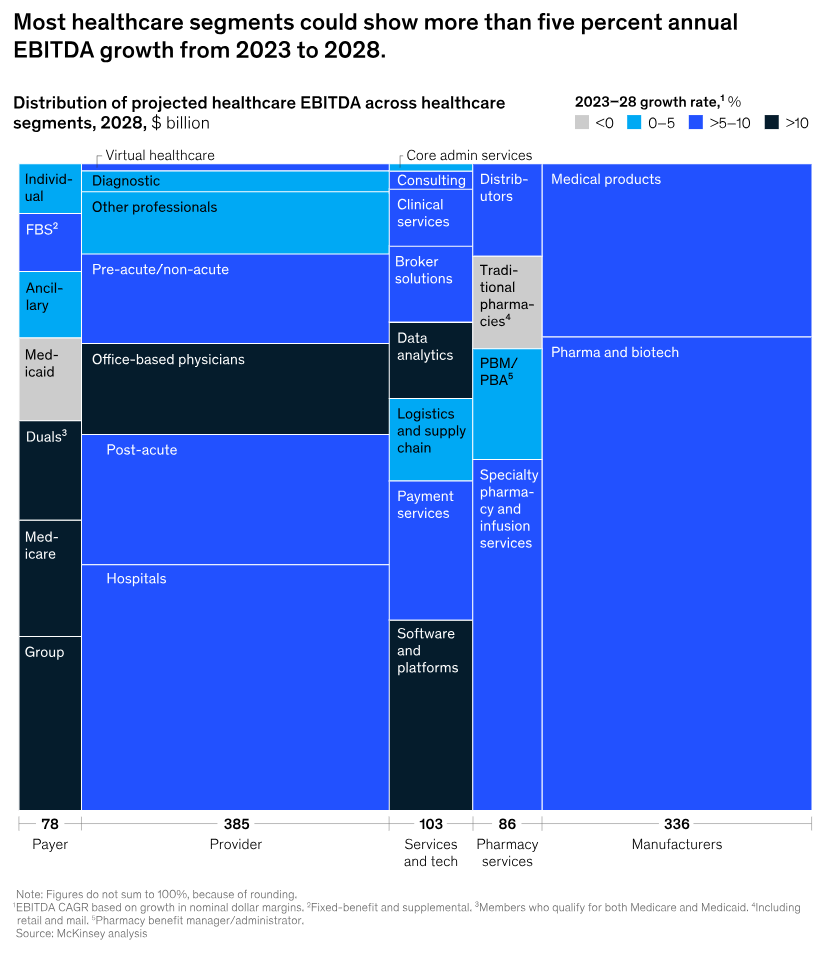
Source: McKinsey & Company report
Navigating a dynamic landscape of the industry requires an acute awareness of the significant hurdles that can derail digital initiatives.
- Financial and Operational Strain: The industry has experienced significant financial pressure since 2019, with constrained reimbursement growth and a shift toward government payer segments like Medicare Advantage. At the same time, over 70% of global health system executives cite improving operational efficiency and productivity as their top priorities for the year, as revealed in the Deloitte survey. This creates an urgent need for healthcare software that drives measurable cost savings and workflow optimization.
- The Workforce Crisis: Clinician burnout, fueled by administrative overload, and widespread talent shortages for technical roles create a dual crisis. Notably, a model developed by the Deloitte US Center for Health Solutions suggests technology could free up 13% to 21% of a nurse’s time (hundreds of hours per year) by automating low-value tasks. The software must reduce, not increase, administrative burden. Success depends on intuitive design, comprehensive training, and demonstrating clear workflow efficiencies to drive user adoption.
- Explosive Growth in Telehealth and AI Convergence: According to Precedence Research, the telehealth market alone is valued at $196.81 billion in 2025 and is expanding at a CAGR of 22.55%. More significantly, AI is supercharging this segment. Applications like AI-driven virtual nursing, predictive chronic disease management, and chatbots for mental health are moving from pilot phases to core components of care delivery.
- Strategic Investment Priorities: Healthcare leaders are pivoting from cost-reduction to organic growth and consumer acquisition. Key investment areas for 2025 included consumer-facing digital platforms (scheduling, health portals, remote monitoring), advanced cybersecurity measures, and technologies that enhance operational efficiency and health equity.
- Market Consolidation and Innovation: The sector is experiencing significant mergers and acquisitions (M&A) as companies seek to build comprehensive platforms. The first half of 2025 saw over 100 healthtech M&A deals, driven by AI integration and stable valuations. Simultaneously, major technology firms are expanding their healthcare suites (e.g., Microsoft’s Health-Care AI Suite), while specialized developers focus on interoperability, cloud migration, and compliance-as-a-service.
- Cybersecurity Threats and Data Protection: Healthcare remains one of the most targeted industries for cyberattacks, with ransomware incidents increasing year over year. Security and data breaches don’t just threaten operations, they endanger patient safety and destroy trust. That is why software solutions must include robust encryption, role-based access control, audit trails, anomaly detection, and secure integration patterns.
5 Healthcare Software Trends Defining the Future for 2026-2030
In response to these pressures, investment is coalescing around a few transformative technological domains. The following table outlines the key trends that healthcare businesses might want to have eyes for:
| Trend | Core Focus & Driver | Key Technologies & Applications | Strategic Impact |
| 1. Generative & Agentic AI | Automating administrative burden and clinical workflow. | AI medical scribes (e.g., Abridge), AI scheduling assistants, clinical documentation copilots. | Frees clinician time, reduces burnout, improves document management and reporting, and accelerates revenue cycles. |
| 2. Interoperability as Infrastructure | Regulatory mandates (Cures Act, HTI-1) and the breakdown of data silos. | HL7 FHIR APIs, SMART on FHIR, TEFCA compliance. | Enables seamless care coordination, powers advanced analytics, and allows for a best-of-breed software ecosystem. |
| 3. Hybrid & Home-Based Care Expansion | Patient preference, cost efficiency, and site-of-care shifts. | Advanced telehealth platforms, Remote Patient Monitoring (RPM), and integrated “hospital-at-home” tech stacks. | Expands access, opens new revenue streams, and improves chronic disease management outcomes. |
| 4. Cybersecurity by Design | Rising frequency of sophisticated attacks targeting valuable patient data. | Proactive threat monitoring, end-to-end encryption, zero-trust architectures, and compliance automation (HIPAA, SOC 2). | Protects financial stability, maintains patient trust, and is a prerequisite for any digital initiative. |
| 5. Precision Medicine & Advanced Analytics | Demand for personalized care and data-driven decision-making. | AI-powered diagnostics (imaging, genomics), population health analytics, and real-world data platforms. | Improves diagnostic accuracy, enables personalized treatment plans, and supports value-based care contracts. |
Leading Healthcare Software Development Companies in the USA
Given the complexity of the market, selecting a partner requires moving beyond feature lists to a strategic evaluation. Companies generally fall into several archetypes, each with distinct strengths. Therefore, we analyzed them based on a synthesis of their published service offerings, technology specializations, and compliance statements, evaluated through the lens of healthcare technology and market trends.
1. XB Software
XB Software is a full-cycle software development company with a strong focus on healthcare solutions. Combining deep industry knowledge with modern technologies, the company is able to deliver HIPAA-compliant, scalable, and secure software for hospitals, clinics, telehealth platforms, and medical device integration.
Services:
- Custom system development for healthcare & overlapping industries (logistics ー delivery of pharmaceuticals, energy ー powering hospitals, education ー healthcare depends on constant training, etc.);
- Legacy app modernization services;
- Front-end development for healthcare;
- Booking & scheduling system development;
- Mobile health apps & patient portals development;
- Document & workflow automation services.
Why top-ranked: XB Software stands out for deep domain knowledge and ability to build fully customized solutions that meet healthcare compliance, improve patient outcomes, and optimize provider workflows. No matter the project, partnering with XB Software helps healthcare organizations to deliver better care, operate more efficiently, and stay ahead in a rapidly evolving industry. The vendor is also certified with ISO 9001:2015 and ISO/IEC 27001:2022, which ensures that clients get secure and high-quality medical systems.
The team’s experience in large-scale healthcare projects ensures high-quality, secure, and interoperable software. XB Software has diverse experience in developing custom EHR/EMR systems, healthcare CRM systems, custom apps for specific medical fields (cancer, dermatology, etc.), medical supply inventory management systems, migraine tracking apps, medical appointment scheduling software, health & fitness tracking mobile applications, online medical professional testing systems, and other healthcare management solutions. The company also offers a free Medical Service Booking demo for those medical organizations that are unsure if the future software solution fits their requirements and needs.
Read Also From Paper to Platform: How Pain Clinics Can Seamlessly Transition to EMR
2. CleverDev Software
CleverDev Software specializes in IT solutions that streamline clinical workflows and enhance patient engagement. The company is recognized for combining technical expertise with healthcare domain knowledge, delivering Remote Patient Monitoring systems, EMR and EHR Management platforms, and other healthcare software solutions.
Services:
- Software development from scratch;
- System modernization;
- Hospital management systems and Telemedicine app development;
- EHR/EMR integration;
- Data security & compliance consulting;
- HealthTech consulting.
They create compliant and business-driven applications in line with DICOM, FHIR, ICD-10, and more. CleverDev’s ability to combine technical expertise with deep healthcare knowledge allows the company to deliver solutions that improve operational efficiency, reduce administrative burdens, and enhance patient care.
3. Computools
Computools focuses on custom healthcare software with a strong emphasis on automation, AI, and digital transformation for hospitals and clinics. The company develops Electronic Health Records software, telemedicine and virtual care platforms, Remote Patient Monitoring systems and other solutions for hospitals, clinics, pharmacies, and healthtech startups.
Services:
- Mobile app development;
- Healthcare software modernization;
- CX strategy & design;
- Software engineering services;
- Clinical workflow automation;
- HeathTech solutions for startups.
Computools delivers innovative, scalable solutions that reduce operational costs while improving patient experience. The vendor excels in developing scalable and innovative solutions that improve healthcare efficiency and patient satisfaction.
4. SPSoft
SPSoft develops secure healthcare software designed for complex clinical workflows and regulatory compliance. The company builds custom EHR, EMR, HL7 FHIR, practice management, telehealth, SaMD (Software as Medical Device), and other solutions based on the experience of practicing clinicians and health professionals in the team.
Services:
- AI-driven healthcare software development;
- Interoperability solutions & services
- FHIR/HL7 integrations;
- HIPAA-compliant mobile app development;
- Cloud infrastructure security audits;
- Healthcare data analytics.
SPSoft combines security, compliance, and modern UX to deliver reliable solutions, making them a trusted partner for healthcare organizations with high standards for data protection. They offer FDA-compliant technical documentation and follow vital industry standards, including ISO13485, IEC62304, SOC 2, and HITRUST.
5. Glorywebs
Glorywebs provides healthcare software tailored for hospitals, clinics, and telemedicine platforms. They build hospital and clinic management systems, telehealth solutions, appointment scheduling systems, and more – all of the following HIPAA, GDPR, HL7, FHIR and other standards.
Services:
- End-to-end healthcare software development;
- Software strategy consulting;
- PoC & MVP development;
- Healthcare software integration & modernization;
- Health data analytics;
- AI-driven decision-making tools development.
Glorywebs focuses on efficiency and compliance, helping healthcare providers streamline their operations. The company stands out for user-friendly software that enhances hospital operations, reduces administrative overhead, and improves patient experience.
6. Orangesoft
Since 2011, Orangesoft has specialized in end-to-end healthcare software development, covering product discovery, design, development, compliance support, and post-launch maintenance. The team has hands-on expertise in HIPAA, FDA, MDR, GDPR, and healthcare data interoperability standards, such as HL7 and FHIR.
Services:
- Custom healthcare software development;
- Wearable device integration;
- AI-powered software development;
- Legacy healthcare system modernization;
- Compliance and security audits;
- MVP development for healthcare.
Orangesoft’s portfolio features telemedicine platforms, remote patient monitoring systems, clinical decision support tools, and Software as a Medical Device (SaMD) solutions. Every project is built with security, compliance, and accessibility at its core.
7. Concetto Labs
Concetto Labs specializes in developing HIPAA-compliant healthcare applications for hospitals, startups, and telemedicine providers. They build medical device software, pharmacy management systems, CRMs, Laboratory Information Management System (LIMS) systems, RCM (Revenue Cycle Management) software, and other solutions to help healthcare organizations to simplify tracking, ensure compliance, and automate their operations.
Services:
- AI-powered healthcare solutions;
- Telemedicine software development;
- IT consulting services;
- Integration with medical devices & wearables;
- Mobile health apps for patient engagement;
- Healthcare IT Support Services.
Strong focus on compliance, security, and innovative features makes Concetto Labs a reliable choice for healthcare organizations aiming for operational excellence.
8. Tech US
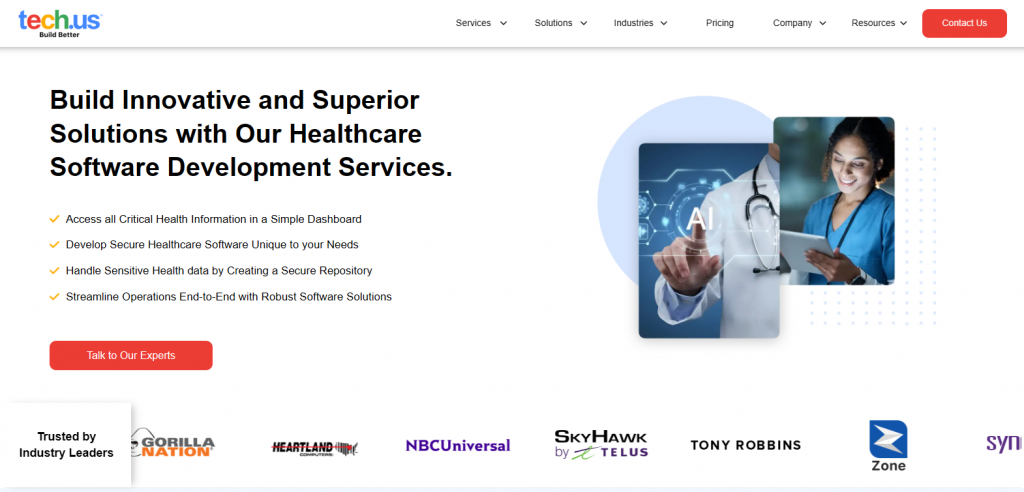
Tech US provides software solutions with end-to-end services, including consulting, development, and support. Their systems adhere to HIPAA, GDPR, FDA, and HITECH.
Services:
- Healthcare software consulting;
- AI-powered workflow automation;
- Software modernization;
- HIPAA compliance cyber security services;
- Healthcare software integration
- Full-fledged mobile app development.
The company delivers reliable, scalable software for both healthcare enterprises and emerging digital health startups. Tech US has experience in developing custom hospital management software, telehealth platforms, and patient engagement solutions for clinics and hospitals, medical laboratories, healthcare centres, pharmaceutical companies, government health departments, and other clients.
9. DreamSoft4u
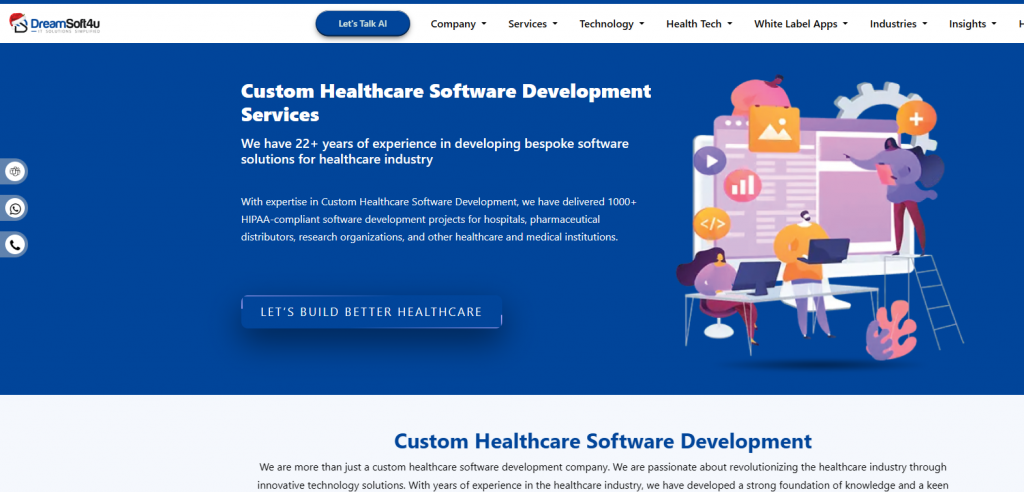
DreamSoft4u develops custom healthcare software tailored for hospitals, clinics, pharmaceutical distributors, research organizations, and digital health startups. Known for combining technical expertise with healthcare insight, the vendor produces systems that improve care quality and operational efficiency.
Services:
- HIPAA-compliant software development;
- mHealth systems development;
- Healthcare & wearable software development;
- Medical animation creation;
- Custom software integration services;
- Comprehensive training & ongoing support services.
DreamSoft4u has expertise in developing fitness & nutrition solutions, clinic management software, e-prescription (ERx) platforms, veterinary practice management systems, and other health management systems that follow HIPAA. ANSI, HHS, ONC-ATCB, BAA, FDA, ICD-10, DICOM, and other healthcare compliance and government regulations.
10. DevTrust
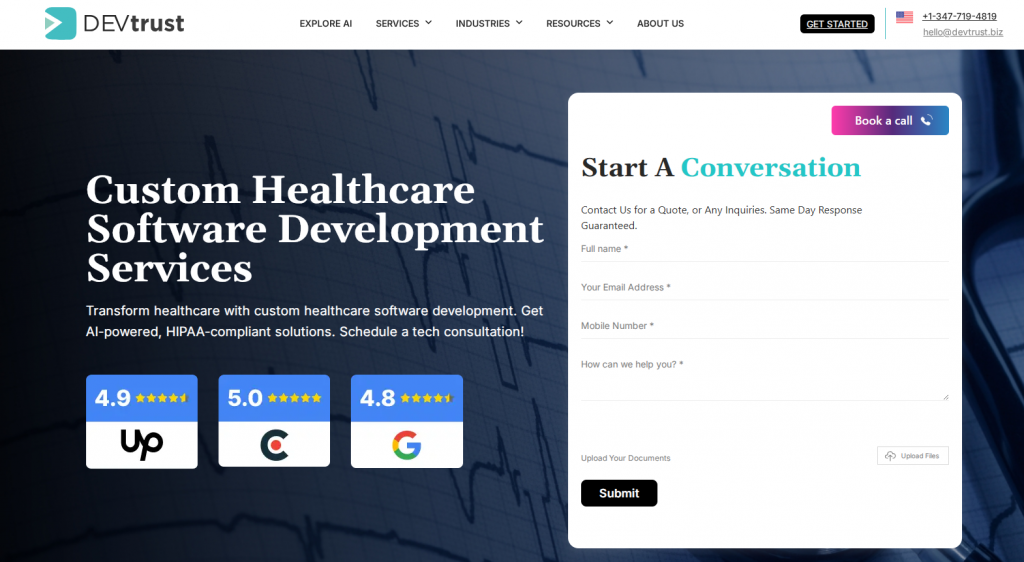
DevTrust delivers custom software with a focus on compliance, patient engagement, and interoperability. The vendor stands out for its focus on security, compliance, and delivering solutions that integrate smoothly with existing healthcare systems.
Services:
- AI-powered software development;
- Front-end & back-end development services;
- UI/UX design for healthcare management solutions;
- Healthcare analytics and reporting;
- HIPAA-compliant mobile app development;
- Quality assurance & testing services for healthcare.
DevTrust builds EHR/EMR systems, practice management tools, remote monitoring apps, billing systems, telemedicine platforms, AI‑powered transcription tools that adhere to HL7, FHIR, HIPAA, GDPR, and other regulatory standards. They can also integrate healthcare systems with the existing CRMs, EHR, etc.
11. TheIntellify
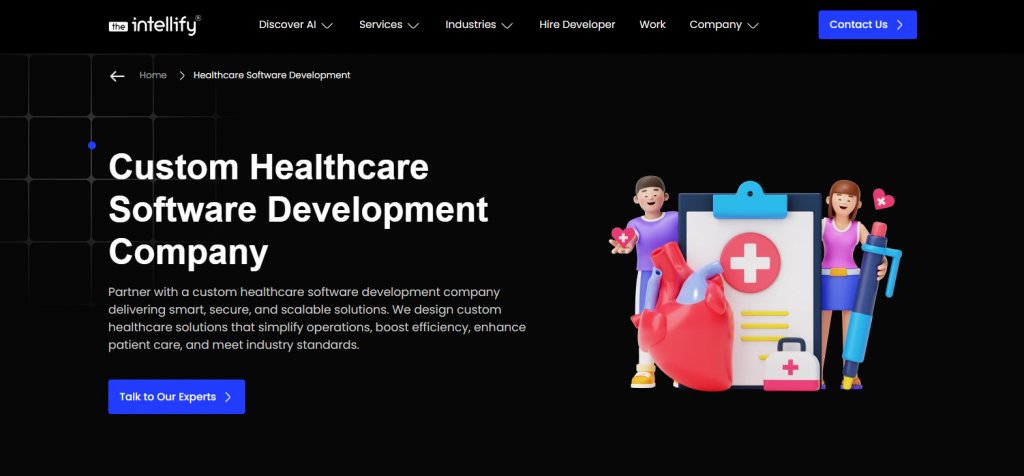
TheIntellify provides custom software for hospitals, clinics, and digital health platforms, emphasizing modern UX and scalable architecture. They build SaaS platforms, EMR/EHR systems, SaMD, telemedicine apps, healthcare marketplaces, claims management software, and other HIPAA-compliant healthcare management tools for small and large sized healthcare organizations.
Services:
- AI agents & virtual health assistants development;
- AR & VR-based healthcare solutions;
- App development for iOS and Android;
- Healthcare IT consulting;
- Legacy healthcare systems modernization;
- Cloud-based medical software development.
TheIntellify stands out for its focus on patient experience, scalability, and delivering flexible, reliable healthcare solutions. Their patient-centric approach and focus on scalability make them a good choice for a software development company.
Read Also How Generative AI Chatbots Transform Business Operations Across Industries
Conclusion: Building a Future-Ready Digital Foundation
The journey toward digital maturity is complex, but the direction is clear. Success belongs to organizations that view technology as the core infrastructure for resilient, patient-centered care. The right healthcare software development partner is a strategic ally in this journey. By aligning your organization’s most pressing challenges (be it burnout, interoperability, or innovation) with the specialized strengths of the top firms analyzed here, you can make an informed choice that delivers not just a product, but a lasting competitive advantage.
If you’re interested in our services, contact us, and our team will provide you with a suitable, scalable, and secure healthcare software solution.