Summary
Patient feedback has evolved into a real-time indicator of healthcare performance, but many providers still struggle with disconnected workflows and manual follow-ups. This article explores how care coordination software, healthcare workflow automation, and AI-powered tools help ambulatory organizations act on patient feedback faster, improve patient satisfaction, reduce staff burden, and turn feedback into actionable operational insights.
From just a measure of satisfaction collected after a visit, patient feedback in healthcare has become an operational signal that reflects how well the entire care delivery system is functioning in real time.
The challenge most healthcare organizations face today is how quickly and effectively they can act on the collected feedback. In environments where patient volumes are growing and staff capacity is limited, delays between feedback and response directly impact patient retention, staff workload, and overall care quality. This is where care coordination software and broader healthcare workflow automation start to play a critical role.
Why Patient Feedback Is Operationally Critical in Healthcare
Healthcare systems are increasingly shaped by expectations that come from outside the industry. Patients are used to fast, transparent, and personalized experiences in other services, and they expect the same level of responsiveness in care delivery.
A survey of 2,000 U.S. adults, published on New York Post, found that:
- 71% expect digital appointment reminders;
- 63% are ready to use patient portals;
- 53% demand online scheduling;
- Two-thirds believe technology improves their healthcare experience.
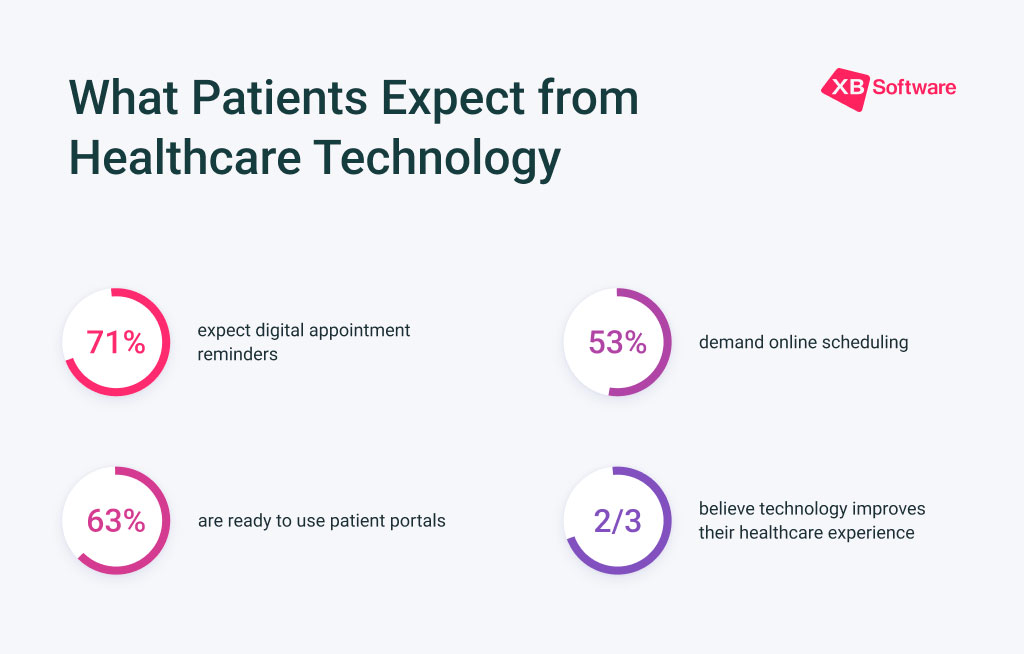
Patients expect digital communication, making patient communication software and healthcare workflow automation increasingly important. Moreover, patients judge care by outcomes, communication, responsiveness, and how quickly issues are resolved.
Communication quality in particular remains one of the strongest predictors of patient experience, which is why delays in responding to patient concerns can directly affect satisfaction scores. According to the latest national HCAHPS data published by CMS, 80% of patients reported that nurses “always” communicated well which improved their hospital stay.
It would be impossible to know all this data without gathering feedback from patients about their care.
That is why patient feedback management software is a key component of operational decision-making. Feedback influences how organizations think about patient retention in healthcare, service quality, and even internal resource allocation.
For ambulatory care providers in particular, where interactions are short and high in volume, every unresolved issue can accumulate quickly. What may seem like a small delay in response often turns into a broader signal of inefficiency across the system.
Ambulatory care organizations operate under a very specific constraint: they are expected to deliver high-quality care with limited staff and growing demand. This imbalance has become one of the main operational challenges in healthcare.
On one side, patient volumes continue to increase. On the other, clinical and administrative teams are already stretched thin. This creates pressure not only on scheduling and care delivery, but also on everything that happens after the visit, including communication, follow-ups, and issue resolution.
In many cases, organizations rely on healthcare workforce management systems to optimize staffing and scheduling. However, even with these tools in place, staff burnout remains a real issue. A significant part of the problem comes from fragmented communication and manual coordination work that sits outside structured workflows.
Without proper healthcare workflow management, even well-staffed organizations struggle to maintain consistent response times to patient concerns. Over time, this leads to operational inefficiencies and increased pressure on teams that are already operating at capacity.
Read Also How Software Tools Help Ambulatory Clinics Manage Staffing Challenges
In most healthcare organizations, patient feedback is collected through multiple channels. Surveys, patient portals, phone calls, and front-desk interactions all generate valuable information. The problem is that this information rarely exists in a unified system.
Instead, feedback often ends up spread across different tools and teams, with no consistent process for prioritization or follow-up. In practice, this means that one complaint may be handled immediately while another is overlooked simply because it was captured in a different system.
This fragmentation creates a gap between collection and action. Even when organizations use patient communication software or basic CRM tools, the lack of structured workflows means that follow-ups are still managed manually. Tasks are often tracked in spreadsheets or email threads, and ownership is not always clear.
Over time, this leads to delays in resolution, inconsistent communication with patients, and increased administrative burden. More importantly, it creates a situation where feedback loses its operational value because it cannot be reliably translated into action.
Read Also How Healthcare Apps Use PDF.js, At.js, and AI Transcription to Improve Medical Documentation
How Care Coordination Software Helps with Patient Satisfaction
Healthcare coordination platforms change the structure of how feedback is handled. Instead of treating patient feedback as isolated data, they integrate it directly into operational workflows.
- Centralized Patient Feedback Management: When a patient submits feedback, it is not just stored for later review. It is immediately processed, categorized, and turned into a trackable action within the system. This is a fundamental shift in how patient complaint management is handled.
- Automated Workflow Routing: With healthcare management software, feedback can be automatically routed to the right team based on type, urgency, or department. This removes the need for manual triage and reduces the time between identification and response. Tasks are assigned with clear ownership, and resolution status is tracked in real time.
- Real-Time Patient Communication: Integrated real-time patient communication ensures that patients are not left without updates. They can be informed when their issue is being reviewed, when action is taken, and when it is resolved. This creates a closed feedback loop, which is essential for building trust.
- Cross-Department Coordination and Accountability: A healthcare coordination platform connects clinical teams, scheduling staff, care managers, and administrators through shared workflows and task management capabilities. Everyone involved can view responsibilities, deadlines, and resolution status, ensuring that patient concerns do not fall through organizational gaps. This level of healthcare workflow management improves accountability while reducing administrative overhead and staff burnout.
- Analytics, Reports, and Performance Dashboards: Patient satisfaction software provides customizable reports and dashboards that help healthcare leaders to identify recurring issues, monitor response times, track patient sentiment, and measure improvement initiatives across locations or departments. Instead of reacting to individual complaints, organizations can identify systemic problems before they affect larger patient populations.
- AI-Powered Trend Detection and Prioritization: AI in healthcare operations helps organizations to analyze large volumes of patient comments and survey responses to identify patterns that might otherwise go unnoticed. AI-powered patient feedback management software can prioritize urgent cases, detect emerging issues, and highlight trends that require immediate operational changes, enabling proactive rather than reactive care management.
Read Also Clinical Workflow Optimization Through Patient Identification and Traceability
The Role of AI in Healthcare Operations
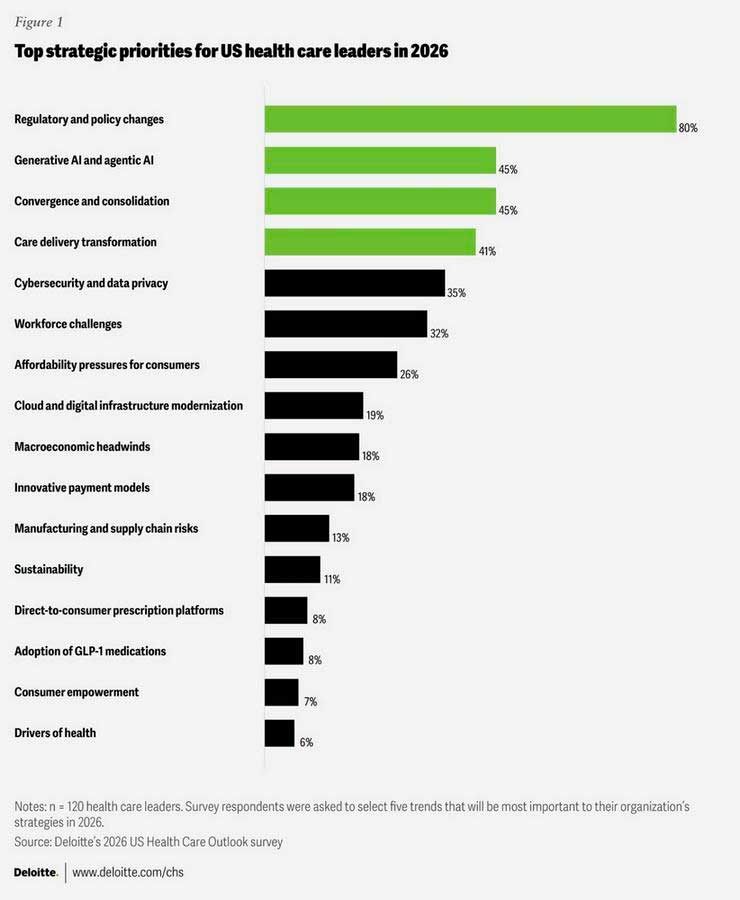
Deloitte’s 2026 survey highlights the use of generative AI and agentic AI as one of the critical strategies for health care organizations aspiring to build resilience and achieve sustainable growth in the future years.
As healthcare systems become more complex, AI in healthcare operations is increasingly used to support decision-making within feedback workflows. AI can help to identify patterns in patient feedback that would otherwise be difficult to detect manually. For example, recurring complaints about a specific service line or department can be flagged automatically.
In more advanced implementations, AI-powered patient feedback management software can also help to prioritize issues based on urgency or potential impact. This allows teams to focus on the most critical cases first, rather than processing feedback in a purely chronological order.
AI also supports better workload distribution. By analyzing incoming feedback and operational capacity, systems can help to balance assignments across teams, which contributes to reducing staff overload and improving response times.
Read Also How HealthTech Businesses Can Choose Between General-Purpose and Medical AI
Case Example: Modernizing Care Coordination and Feedback Management in Practice
In one of XB Software healthcare projects focused on care management modernization, a provider faced many of the same challenges common to ambulatory organizations.
Care coordination processes were spread across multiple disconnected systems (scheduling, documentation, messaging, lab, and reporting), communication between teams was fragmented, and handling patient concerns often depended on manual follow-ups and email chains. As a result, issues could remain unresolved for too long, while staff spent valuable time searching for information instead of acting on it.
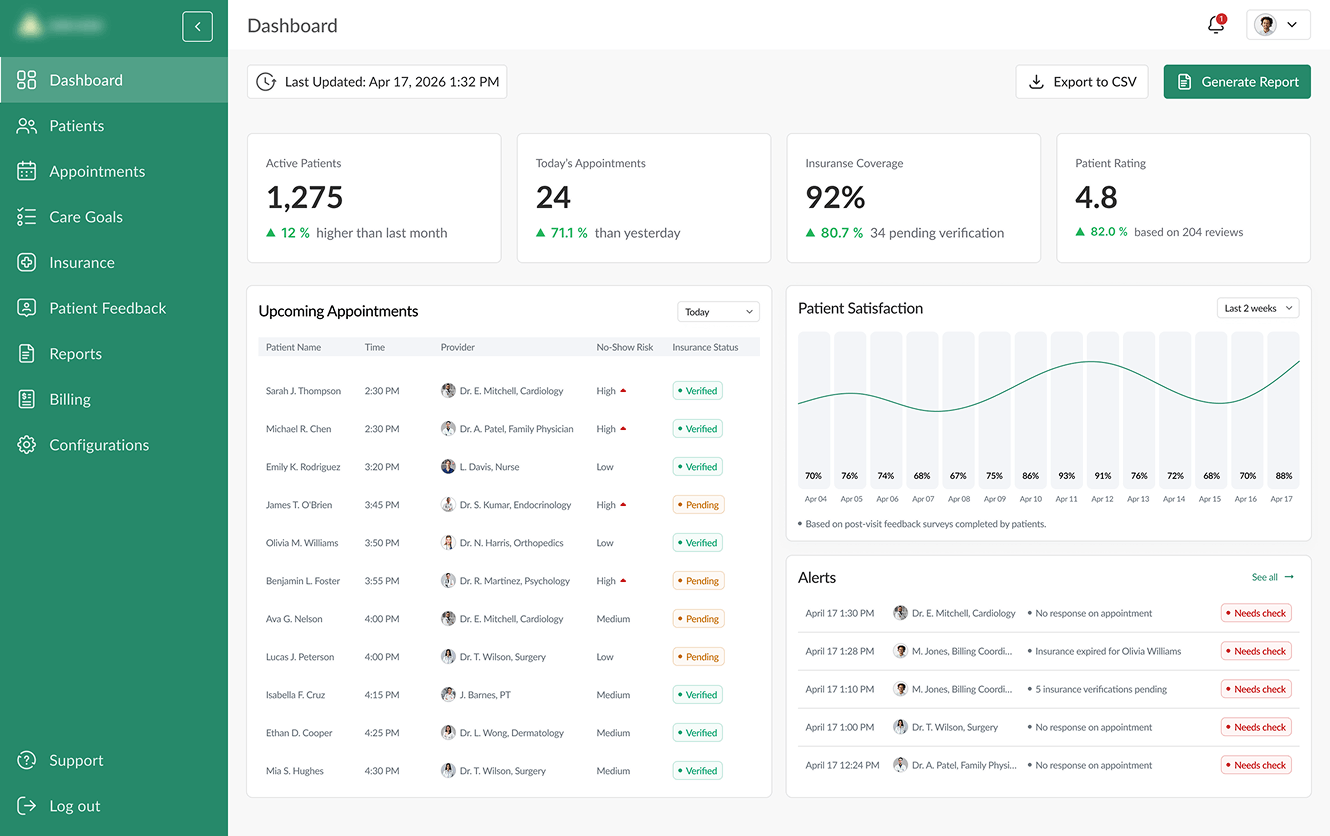
Case study: Care Management and Coordination Software Modernized for a US Healthcare Company
The legacy system modernization effort was focused on building a centralized care coordination platform that could unify workflows across departments. Instead of relying on separate systems for communication, task tracking, and coordination, everything was brought into a single environment connected to existing healthcare systems.
To improve patient feedback management, XB Software implemented role-based task workflows, real-time notifications, and centralized visibility into ongoing activities. Instead of relying on disconnected communication channels and manual feedback management, we added a customizable assessment and feedback module.
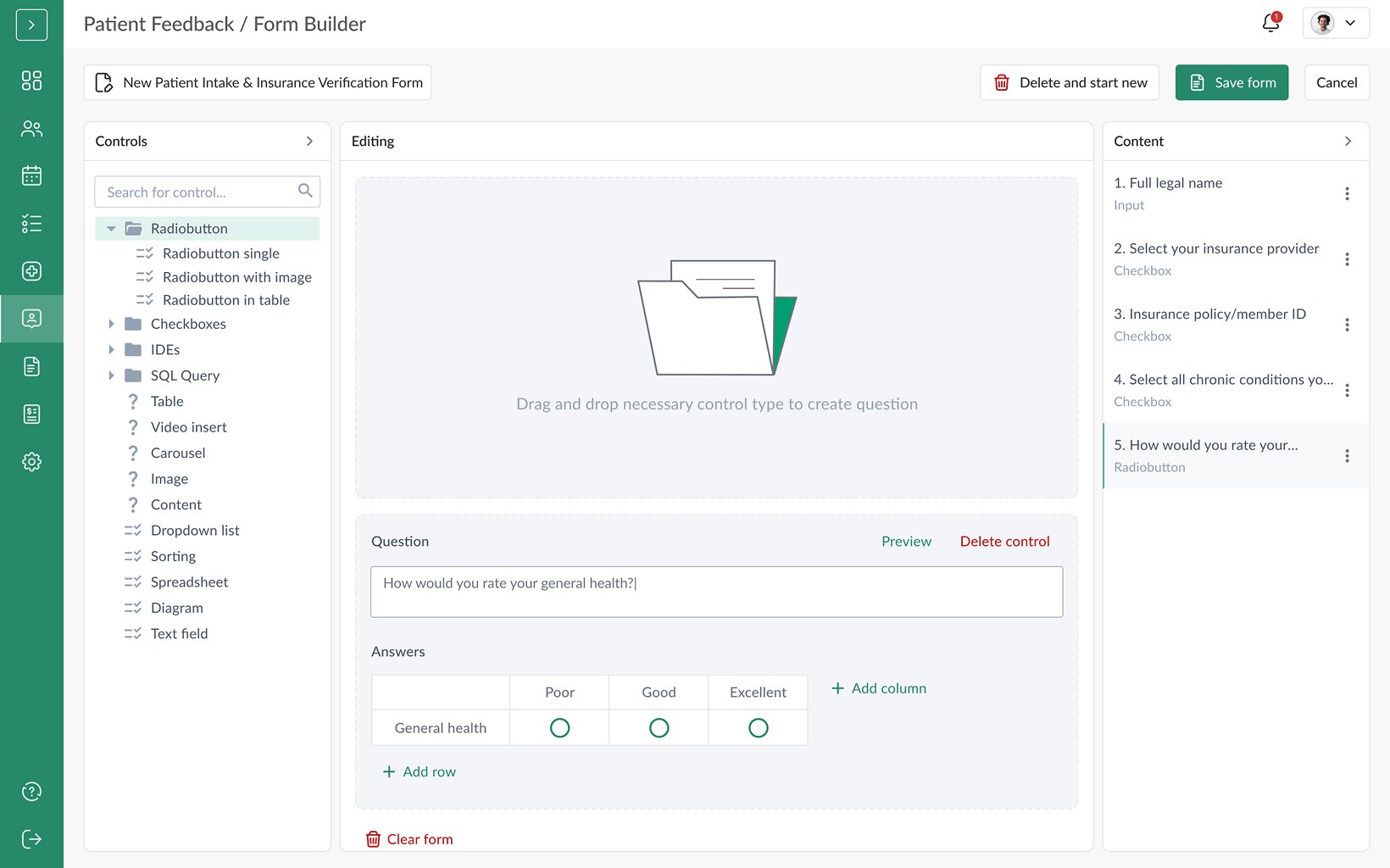
Form Builder built based on Examarius Online Testing System
Inspired by our experience implementing Examarius-based assessment capabilities in various software solutions, we developed a flexible Patient Feedback & Assessment module with a custom Form Builder.
The solution allowed administrators to create and modify patient satisfaction surveys, onboarding questionnaires, and service assessment forms without requiring additional frontend development. This approach enabled the client to adapt feedback workflows as requirements evolve while collecting structured patient data in a consistent format. Built-in digital feedback collection and reporting capabilities provided better visibility into patient experience trends and support data-driven improvements across care delivery processes.
As a result, the organization gained better visibility into patient-related workflows, improved coordination between teams, and significantly reduced the time required to respond to operational issues. More importantly, feedback was no longer treated as a separate administrative burden but as part of the care delivery process itself.
This approach demonstrates how custom healthcare software development can be used not just to digitize processes, but to fundamentally improve how care is coordinated across the organization.
Read Also Patient Management Software Features That Improve Healthcare Workflows
Conclusion: Closing the Gap Between Patient Feedback and Action
Patient experience isn’t simply a quality metric. Patient feedback has evolved from a post-visit measurement into a real-time indicator of how effectively healthcare organizations coordinate care.
Through HCAHPS and value-based reimbursement programs, patient feedback has become an operational indicator that healthcare organizations continuously monitor. More than 4,000 U.S. hospitals participate in patient experience measurement programs, and communication remains one of the strongest drivers of satisfaction.
Unfortunately, many healthcare providers still rely on disconnected systems and manual processes that create delays, increase staff workload, and prevent valuable insights from turning into meaningful action. At XB Software, we believe that effective patient feedback management is ultimately a coordination challenge. So if you need our help in developing care coordination and feedback management software, please contact us.