Summary
AI is transforming software development, but not every AI-driven approach fits every project. This article compares traditional programming, vibe coding, and AI-assisted development to help businesses balance speed, scalability, maintainability, TCO (total cost of ownership), security, and long-term product stability.
It’s hard to deny that software development changes dramatically every time a new technology reshapes the industry. Artificial Intelligence has already done exactly that. In just a few years, development teams moved from using AI as a simple autocomplete assistant to relying on AI agents that can generate interfaces, APIs, tests, and even full application flows from a single prompt.
At the same time, new terms started flooding the market: AI-assisted development, vibe coding, agentic coding, AI engineering, spec-driven development. They’re often used interchangeably, even though they describe very different software development methodologies with completely different risks, costs, and business outcomes. So, let’s break down the definition, meaning, and practical differences between three key approaches and, more importantly, help you to understand which one actually works for your project.
How AI Triggered a New Phase of Software Development
Just a few years ago, building software still required a fairly predictable combination of time, money, and engineering effort. Even a simple MVP demanded weeks of backend setup, frontend development, infrastructure configuration, software testing, deployment, and documentation. Now, almost anyone with or without technical knowledge can generate a working software prototype in several days. “Can we build it?” is no longer asked.
The rise of AI vibe coding changed how businesses think about software delivery. But for CTOs, founders, and product owners, this transformation creates a real problem. The internet keeps promising “10x faster development” and “apps built in a weekend,” but few people explain what happens after the prototype works on the surface.
Who maintains the code?
Who fixes scaling problems?
What happens when AI-generated architecture starts collapsing under real users?
This is why the discussion around AI vs traditional software development is often misleading online. AI absolutely accelerates development, but acceleration without engineering discipline often creates hidden liabilities and increases the cost of bad engineering decisions hiding beneath fast-moving codebases.
Many companies discover this only after:
- the application slows down under load,
- AI-generated logic becomes impossible to debug,
- developers stop understanding the architecture,
- or scaling the product suddenly requires a partial rewrite.
That is why it is vital to understand the differences between “I vibe coded this app in just two days” and “I want this app to work as my business requires, but make it faster”.
Read Also The Gap Between AI Prototypes and Production Software: 10 Risks You Can’t Afford
What Is Traditional Programming (“White Coding”)?
Traditional programming, often referred to as white coding, is a structured software development methodology where engineers write, test, and maintain code manually. It relies on:
- explicit planning and formal requirements,
- structured architecture,
- detailed documentation,
- strong governance and compliance.
This approach is commonly used in enterprise software, regulated products, and complex multi-team systems, because it grants high control, predictability, and long-term maintainability. Traditional development remains the safest option when stability, security, and scalability are critical.
Development skills requirements: strong engineering background, deep knowledge of traditional coding methods, and architecture and system design.
Level of process control: full control over architecture and logic.
Quality and maintainability: high consistency, long-term maintainability.
Security, compliance, and governance risks: security reviews, compliance processes, access control validation, testing pipelines, following governance standards.
What Is Vibe Coding?
Vibe coding, also AI vibe coding or vibe engineering, is a modern development style where users describe what they want in natural language, and artificial intelligence generates most of the application logic, structure, and implementation automatically. Platforms like Replit Ghostwriter, Lovable, Bolt, Claude Code, Softr, etc. have made this style of development increasingly accessible even for non-technical founders. It relies on:
- high-level prompting instead of detailed engineering,
- rapid prototyping and experimentation,
- low process overhead,
- AI-generated architecture and workflows.
The core idea behind AI vibe coding is speed. Instead of manually designing systems, users focus on intent and iteration while AI tools generate interfaces, backend logic, and integrations. Vibe engineering is especially popular for startup MVPs, proof-of-concept products, internal utilities, and rapid experiments where time-to-market matters more than architectural perfection.
Development skills requirements: minimal traditional engineering knowledge, ability to communicate requirements clearly, and understanding of product goals.
Level of process control: low to moderate control, since much of the implementation logic is delegated to AI systems.
Quality and maintainability: inconsistent logic, risk of “spaghetti code”, difficult to maintain.
Security, compliance, and governance risks: vibe coding blindly trusts AI output, routinely shipping hardcoded secrets, client-side auth, and slopsquatted packages to production with no review.
Note that there are also approaches that can be mistaken with vibe coding.
Read Also What it takes to make a vibe-coded product production-ready
Vibe Coding vs. Vibe Debugging
These approaches describe two very different workflows. Vibe coding focuses on generating software quickly through prompts, while vibe debugging refers to the process of fixing unstable or poorly structured AI-generated code after hidden issues begin appearing in real-world use.
Vibe Coding vs. Spec-Driven Development (SDD)
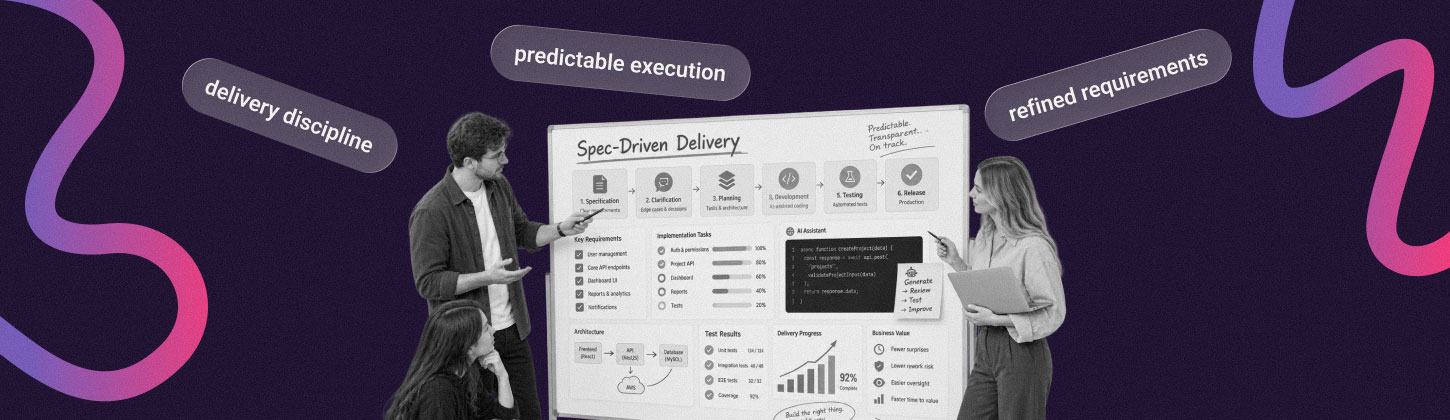
Spec-Driven Development starts with detailed requirements, architecture, and constraints before AI generates code. Vibe coding skips most upfront planning and prioritizes speed and experimentation instead. As a result, SDD produces more predictable and maintainable systems, while vibe coding often creates faster but riskier prototypes.
Vibe Coding vs. Agentic Coding
Agentic coding uses AI agents that can plan tasks, analyze codebases, run validations, and execute multi-step workflows with human supervision. Vibe coding is more prompt-driven and focused on rapid generation. In practice, agentic coding offers more control and scalability, while vibe coding favors speed over structure.
Read Also AI MVP vs Traditional MVP: Key Differences, Benefits & Use Cases
What Is AI-Assisted Development?
AI-assisted software development is a software development methodology where seasoned engineers use artificial intelligence tools to accelerate coding, testing, debugging, and documentation, while humans remain responsible for architecture, validation, and decision-making. It relies on:
- AI-supported development workflows and code generation tools,
- human oversight and engineering review,
- structured specifications and architecture guidance,
- automation of repetitive development tasks.
This approach combines the speed of AI with the control of professional engineering. Developers usually use tools like GitHub Copilot, Cursor, and Claude Code to speed up implementation while maintaining control over scalability, security, and maintainability.
AI-assisted development is increasingly used for SaaS platforms, internal tools, app modernization, and startup MVPs where businesses need faster delivery without sacrificing long-term product stability.
Development skills requirements: engineering experience, understanding of AI coding workflows and ability to guide LLMs, prompt quality and validation, code review, and system architecture.
Level of process control: high control with AI acting as a development accelerator rather than an autonomous decision-maker.
Security, compliance, and governance risks: AI-assisted development adds human review and automated security tests, catching those flaws pre-merge – making it significantly more secure than vibe coding.
Read Also Spec Kit on a Real Project: Implementation Experience in Large Legacy Code
Our Practical Experience with All Three Development Approaches
Industry discussions around AI coding are surprisingly polarized. Some developers believe AI-assisted coding dramatically boosts productivity. Others warn that uncontrolled AI generation creates massive long-term problems.
Still, most experienced teams increasingly agree on one thing: The future is probably hybrid.
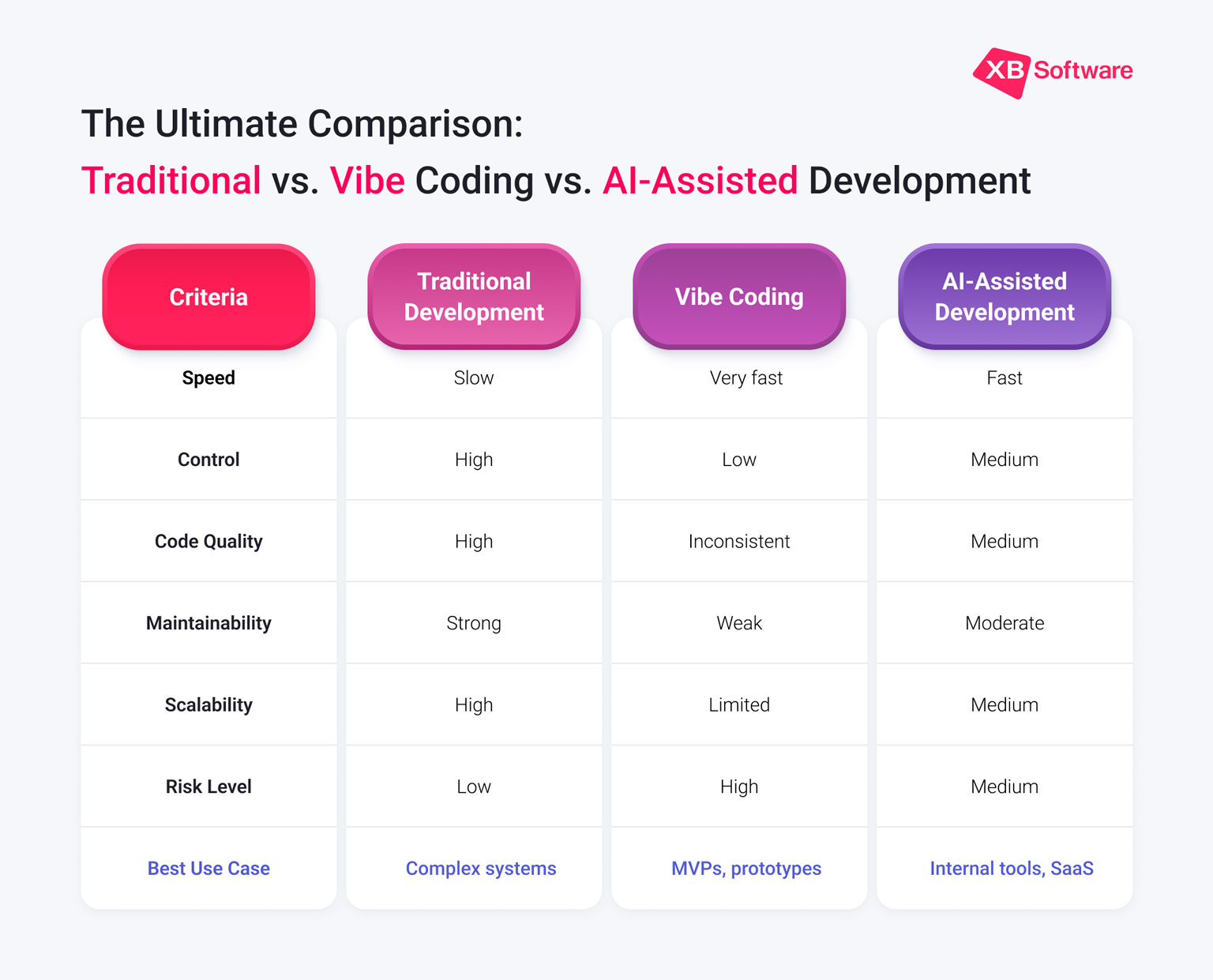
At XB Software, we’ve worked with all three models in real projects, from traditional custom software development to AI-assisted workflows and rapid AI-generated prototypes. The key thing we learned is simple: there is no universally “best” approach. The right methodology always depends on the business goals, project maturity, scalability requirements, budget, deadlines, and risk tolerance.
In practice, different projects require very different levels of engineering control.
Traditional Development ー When Stability Matters More Than Speed
We still use traditional software development for projects where:
- long-term maintainability is critical,
- compliance and security requirements are strict,
- multiple teams work on the same ecosystem,
- or the platform is expected to scale for years.
This is especially common in complex project and resource management systems, healthcare and fintech products, inventory and ERP platforms, large-scale SaaS ecosystems, and legacy modernization projects that require elaborate change of the system architecture. In these cases, structured architecture, detailed planning, code governance, and predictable scalability matter far more than “shipping fast at any cost.”
Traditional development may require more upfront investment, but it significantly reduces technical debt and operational risks in the long run.
Case study: Workforce Management System for Oil & Gas Service Provider
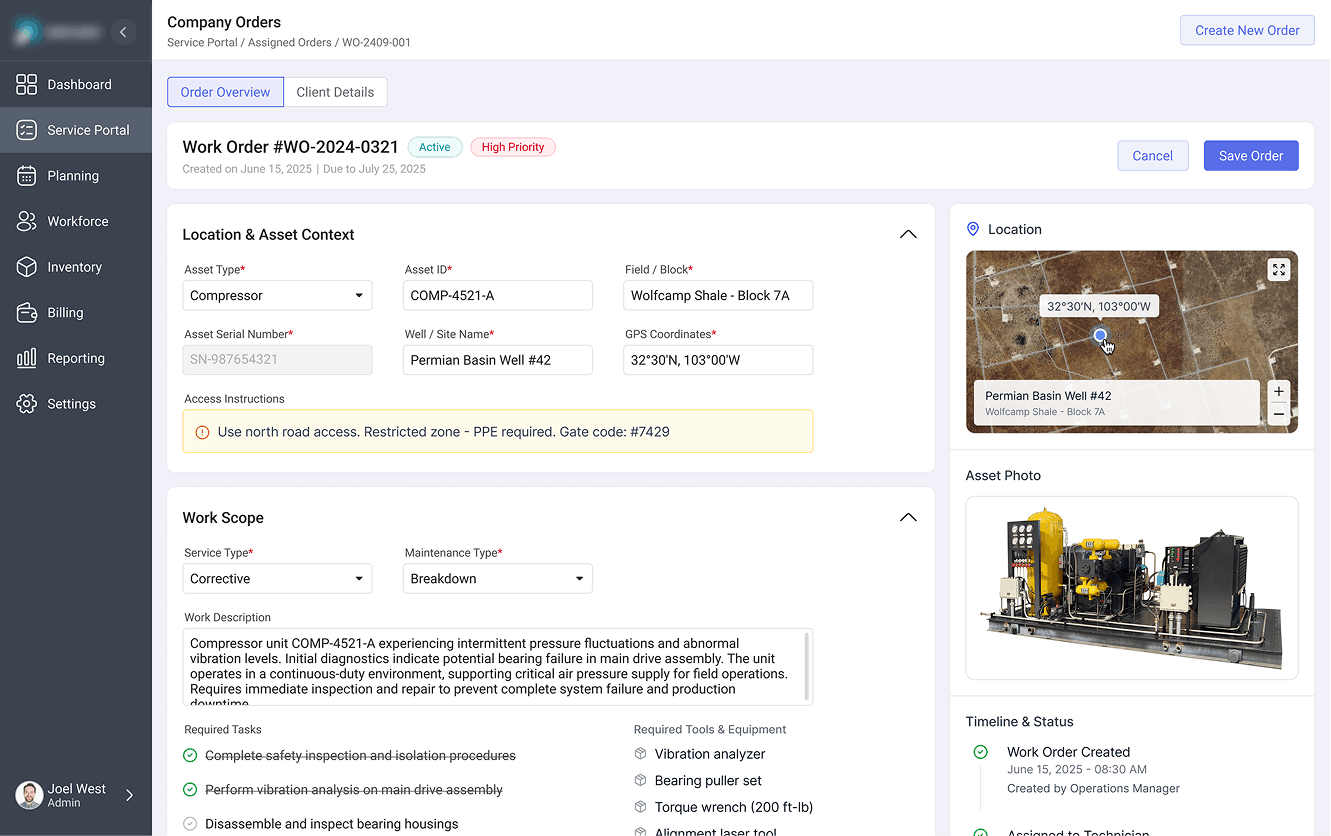
Unlike many modern projects that begin with AI-generated prototypes, this workforce management system for the oil & gas industry was built using a traditional engineering-first approach. The platform required stable architecture, predictable scheduling logic, real-time resource coordination, and long-term scalability across field operations.
Our team designed the frontend with React.js and DHTMLX components, implemented structured backend services with Node.js and REST APIs, and carefully planned data flows between workforce scheduling, inventory tracking, and reporting modules.
This traditional development methodology allowed us to maintain full control over business logic, reduce operational risks, and create a reliable energy management system capable of supporting complex dispatching and logistics workflows in demanding real-world environments.
Vibe Coding ー Useful for Fast Validation, Not Always for Production
We also actively experiment with vibe coding workflows and AI-generated prototypes. For certain scenarios, they are incredibly effective. For example:
- validating startup ideas,
- building proof-of-concept products,
- testing interfaces and user flows,
- creating internal automation tools,
- or rapidly demonstrating product ideas to investors.
In some cases, AI-generated prototypes allow businesses to validate concepts in days instead of months.
However, our experience also shows where vibe coding starts breaking down:
- architecture becomes inconsistent,
- AI-generated logic becomes difficult to debug,
- scalability issues appear early,
- and codebases often become extremely difficult and expensive to maintain after rapid iterations.
This is why we rarely recommend pure vibe coding for business-critical production systems without engineering supervision.
Case study: Healthcare Workforce Management Software for Ambulatory Care
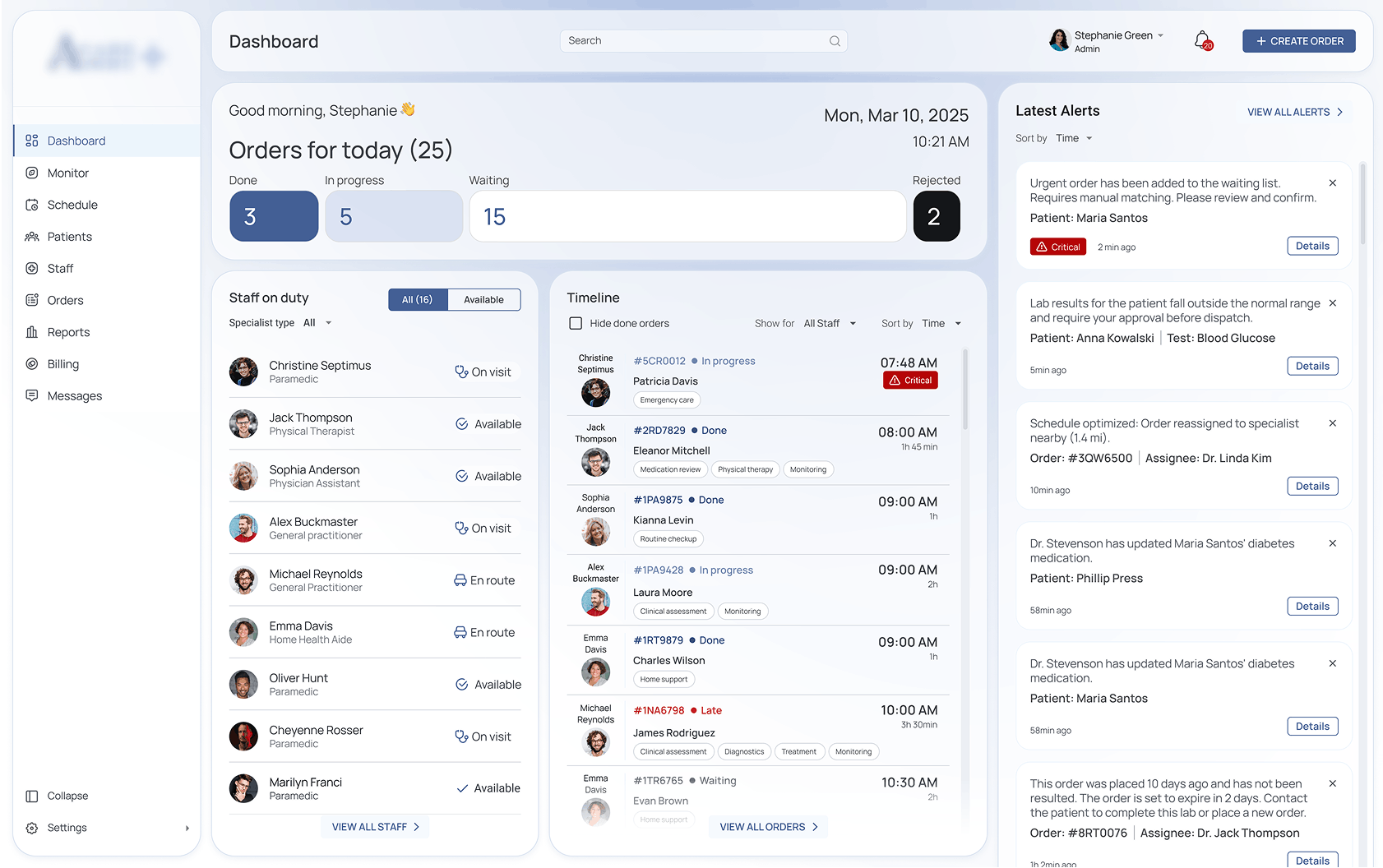
At the early stage of this healthcare workforce management project, we used vibe coding techniques to rapidly generate and experiment with interface concepts before moving into structured frontend development. The goal was not to build a production-ready system immediately, but to help the client quickly visualize possible workflows, dashboards, scheduling views, and patient management screens.
These are the examples of what our UI/UX designer suggested in collaboration with an AI agent:
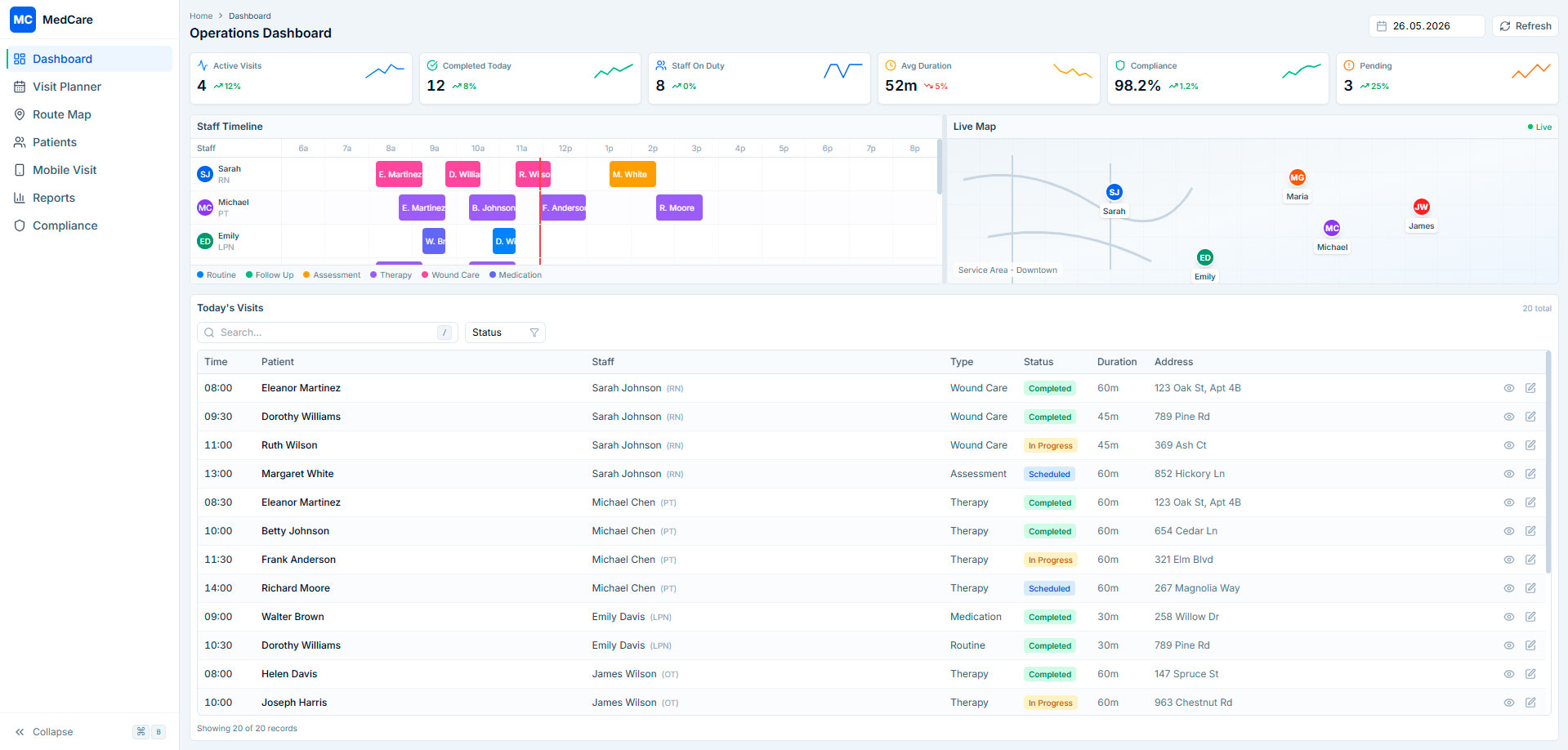
Dashboard with all the important details for Admins to make better decisions
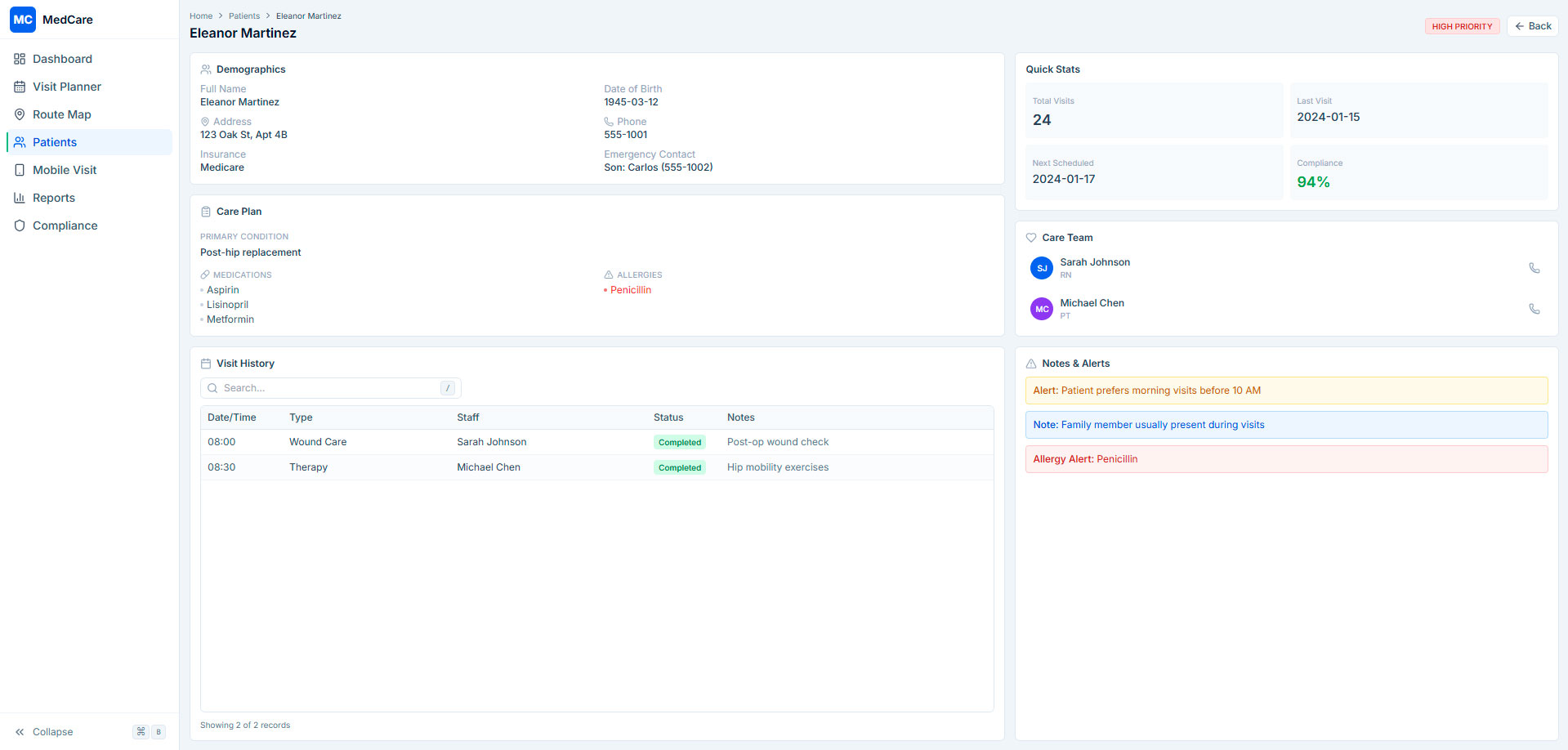
Patient details and visit history with notifications
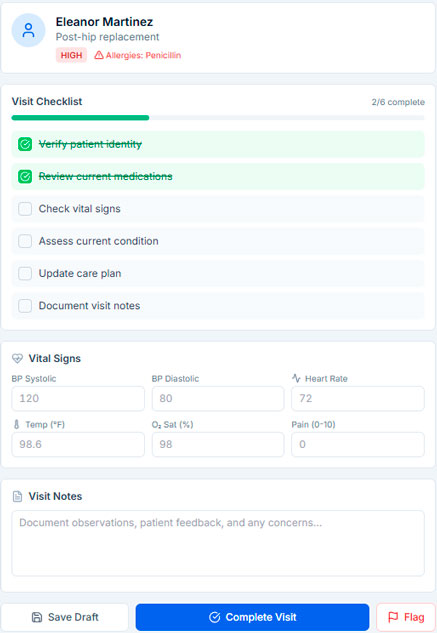
Interface suggestions for the mobile app
This approach significantly accelerated the discovery phase. Instead of discussing abstract requirements, the client could interact with realistic interface prototypes and provide immediate feedback on navigation, layouts, and operational logic. It helped us to validate ideas faster, identify UX bottlenecks early, and align expectations between technical and business teams.
However, the AI-generated interface concepts also revealed common vibe coding limitations: inconsistent UI patterns, fragmented user flows, and structural frontend issues that would become problematic at scale. After validating the direction, our engineers rebuilt and standardized the system using React.js and DHTMLX to ensure long-term maintainability, scalability, and a consistent healthcare-grade user experience.
AI-Assisted Software Development ー The Most Balanced Modern Approach
Today, most of our modern projects use AI-assisted development workflows. This model allows us to:
- accelerate implementation,
- reduce repetitive engineering work,
- speed up testing and debugging,
- improve developer productivity,
- and shorten delivery timelines.
All that while still maintaining engineering oversight and architectural control.
In practice, our engineers use AI as an accelerator, not as an autonomous replacement for software engineering expertise.
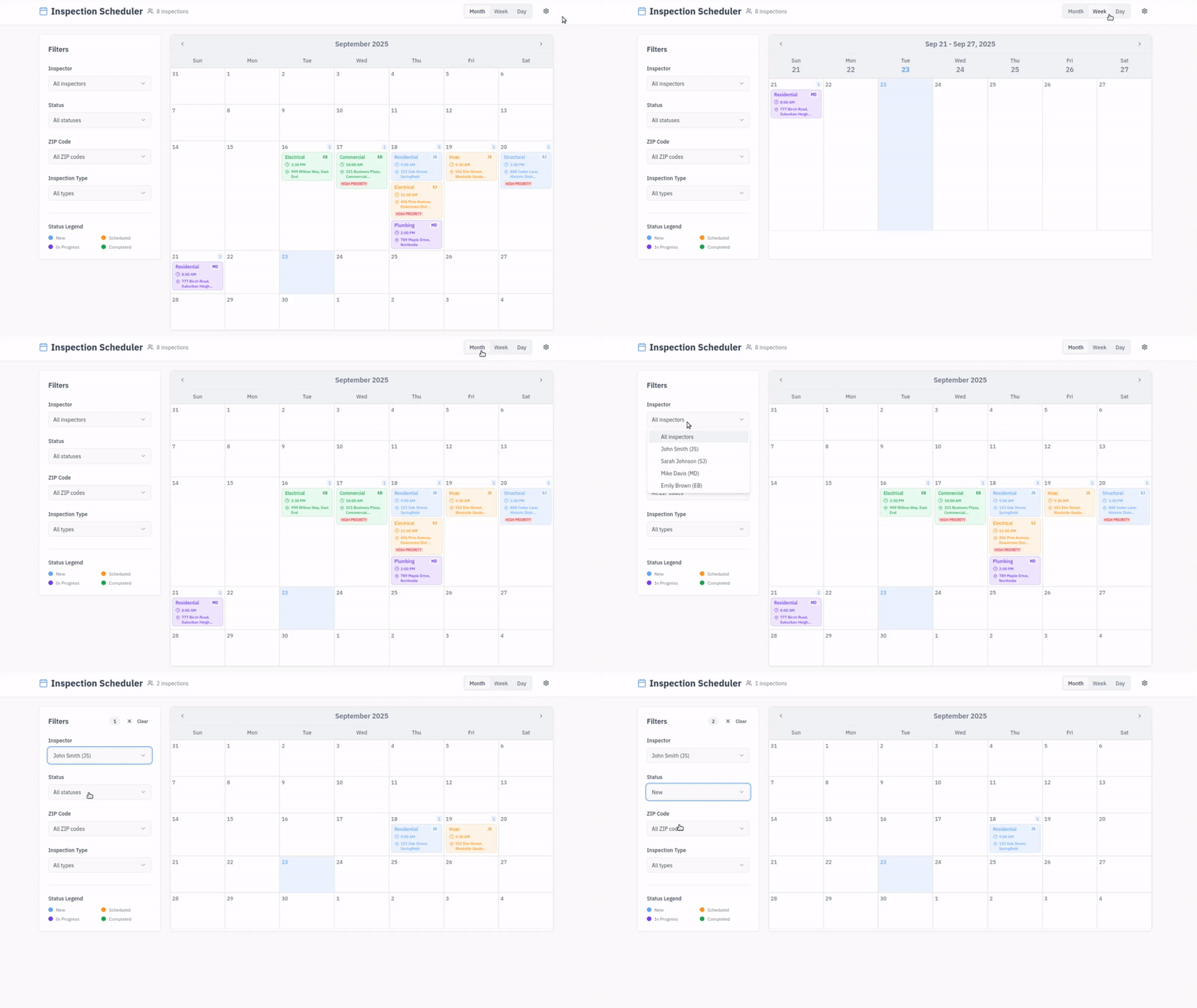
Case study: How to Build a Custom Scheduling App Faster with Lovable AI and DHTMLX Scheduler
In one of our recent scheduling software projects, we combined AI-assisted development with structured engineering practices to accelerate delivery without sacrificing system quality. The project involved building a custom scheduling application with complex calendar logic, resource allocation workflows, and interactive planning interfaces using DHTMLX components.
AI tools helped to speed up repetitive frontend tasks, generate initial UI structures, and accelerate prototyping during early development stages. This allowed our engineers to focus more on business logic, scheduling behavior, and workflow optimization instead of spending excessive time on boilerplate implementation.
At the same time, the project clearly demonstrated why AI-assisted development still requires experienced engineering oversight. Scheduling systems contain highly dynamic interactions, edge cases, and performance-sensitive operations that AI alone cannot reliably architect. Our developers reviewed, refined, and stabilized the generated code, ensuring the final application remained scalable, maintainable, and capable of handling real-world scheduling complexity across multiple user scenarios.
How XB Software Helps Businesses Choose the Right Development Approach
One of the biggest mistakes companies make today is choosing a development methodology based on hype instead of business reality. “AI can build apps in a weekend” sounds impressive until the product starts failing under real business conditions.
At XB Software, we help companies to evaluate:
- what actually needs to be built,
- how fast it needs to launch,
- what scalability expectations exist,
- what risks are acceptable,
- and whether AI acceleration truly fits the project.
In some cases, vibe coding is enough. In others, AI-assisted engineering provides the ideal balance. And for complex ecosystems, traditional structured development still remains the safest investment.

Our role is not to push one trend. XB Software helps businesses to avoid expensive architectural mistakes while still benefiting from modern AI development capabilities.
Depending on your project and needs, XB Software can help you with:
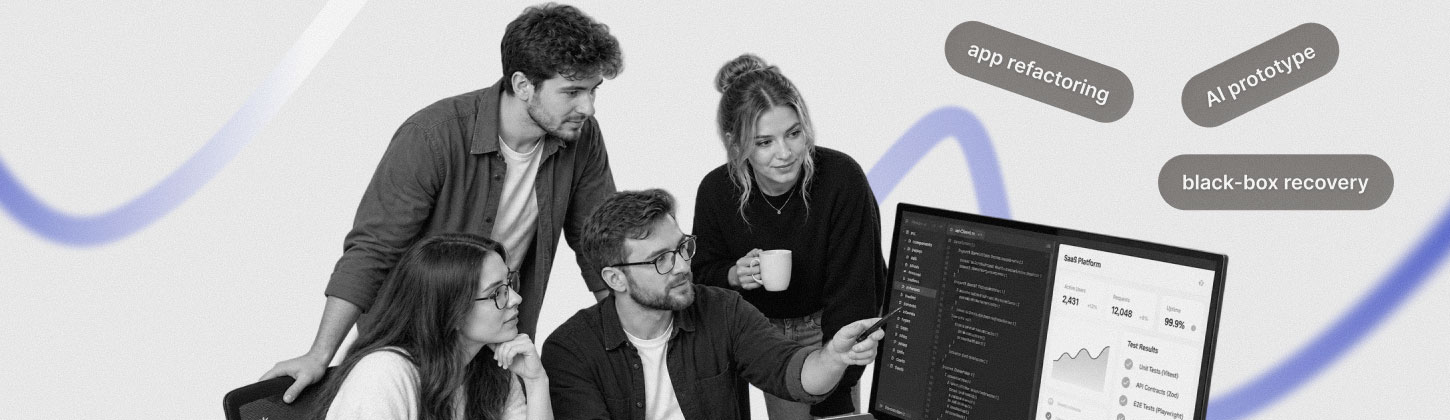
- AI Prototype Stabilization: Already built something with AI tools but the codebase became messy? We will help you to audit your AI-generated system, stabilize the architecture, reduce technical debt, improve maintainability, and optimize performance.
- Spec-Driven Development: Need faster delivery without sacrificing engineering quality? We combine AI acceleration, detailed specifications, senior engineering oversight, scalable architecture design, and full validation workflows.
- Legacy System Modernization: Want to modernize outdated software without rebuilding everything from scratch? We can use traditional programming or AI-assisted workflows to accelerate migration, improve UX, modernize architecture, and reduce modernization costs.
- MVP Development: Need to launch quickly but avoid future rewrite disasters? We help startups to build scalable MVPs, structured architectures, and production-ready foundations.
Because in real-world software development, the fastest code is not always the cheapest code in the long run.
Read Also AI as a Co-Pilot, Not an Autopilot: Guidance on Risk Management and Realistic Performance
Conclusion: AI Changes Development Speed, But Engineering Still Defines Product Success
Artificial intelligence has fundamentally changed how software is built. Tasks that once required weeks of engineering effort can now be completed in hours, and businesses can validate ideas faster than ever before.
AI can dramatically accelerate software delivery, but the faster code is produced without proper engineering control, the higher the risk of unstable architecture, hidden technical debt, and a product that simply won’t survive long-term growth. Speed alone does not replace architecture planning, scalability strategy, or experienced engineering oversight.
That is why now the real question is: How should AI be used responsibly within software engineering?
Traditional programming, vibe coding, and AI-assisted development all solve different business problems, and the right choice depends on your product goals, project complexity, scalability expectations, budget, and other factors.
If you are evaluating whether traditional development, vibe coding, or AI-assisted workflows fit your project, XB Software can help you choose the right approach based on your business goals, technical requirements, and long-term growth plans, so contact us.